 Arctic SDI catalogue
Deforestation
Type of resources
Available actions
Topics
Keywords
Contact for the resource
Provided by
Formats
Representation types
Update frequencies
status
-
Deforestation in Canada is estimated with the National Deforestation Monitoring System (NDMS). Details describing this process are published here: https://cfs.nrcan.gc.ca/publications?id=36042. Deforestation is the direct human-induced conversion of forested land to non-forested land use. Canada’s National Deforestation Monitoring System (NDMS) was designed and implemented to provide information needed by Canada to meet its obligation under the United Nations Framework Convention on Climate Change (UNFCCC) to report the areas affected annually by deforestation. It also provides important information for the public, government policy makers, and scientists. To provide information about the amount of deforestation and why, where, and when it occurred in Canada, the NDMS uses deforestation mapped on a system of sample areas. The mapping is based on visual interpretation of satellite imagery supported by available ancillary information, such as high resolution imagery, forest inventory, and industrial databases, and informed by records-based information and expert knowledge. Accurate detection and mapping of deforestation events involves manual interpretation of satellite remote sensing imagery by specialized analysts. A key factor in the mapping is to distinguish deforestation from other forest cover losses that occur in Canada. The NDMS was designed to make use of all available lines of evidence and be flexible to accommodate variable resourcing levels. This system has been producing national deforestation monitoring results annually since 2006. The flexibility of the NDMS’s design makes it possible to adapt to future changes in data and resource availability, and positions the program well for sustained operational delivery into the future.
-
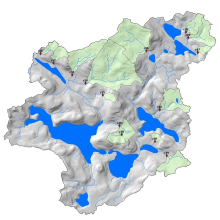
The Turkey Lakes Watershed (TLW) Study was established in 1979 by several federal government departments (Natural Resources Canada, Environment and Climate Change Canada, and Fisheries and Oceans Canada) to study the impacts of acid rain on aquatic and forest ecosystems but has since expanded to include other research on toxic contaminants, forest harvesting, habitat modification, and climate change. The TLW is a mixed hardwood forest with a 10.5 km squared area in the Canada Shield that drains into Lake Superior, and has been the focus of many interdisciplinary, whole-ecosystem studies on environmental issues. Benthic invertebrates, or insects found at the bottom of waterbodies, can be key indicators of stream health and play important roles in nutrient cycling and the food chain. In 1995, a project within the TLW aimed to evaluate how stream ecosystems respond to tree harvesting, which involved long-term surveys of benthic invertebrate communities pre- and post-harvest. Three stream catchments (c31, c33, c34) were harvested at different intensities in the summer of 1997 and were compared to multiple undisturbed catchments. Alongside the invertebrate data, corresponding stream habitat surveys, streamside litterfall traps, leaf decomposition, deposition of stream particulate matter, and standing sediment bedload data was collected during the same period. The data was collected from 1995-2009 by researchers at the Canadian Forest Service (Great Lakes Forestry Centre). This dataset is a rare and valuable resource because there are very few existing long-term datasets of benthic invertebrates from the same locations, and because this dataset is integrated with other biological and chemical datasets within the broader TLW database stored at the Open Government data repository. For an overview of other types of data available from the TLW, see https://doi.org/10.1002/hyp.14109, and for a complete list of publications that have been produced from data collected at this site, see https://www.canada.ca/en/environment-climate-change/services/turkey-lakes-watershed-study/publications.html.