 Arctic SDI catalogue
GeoAI
Type of resources
Categories
Topics
Keywords
Contact for the resource
Provided by
Formats
Representation types
Update frequencies
status
-

Temporal analysis of changes in Quebec city based on GeoAI features automatically extracted from satellite images acquired in 2006 and 2022. Simple geospatial analysis enables the detection of features present in 2022 that were not already there in 2006. The addition of new buildings is a good indicator of urban development and/or sprawl. GeoAI enables temporal coverage of various areas in Canada, thus providing a useful tool for change detection and trend analysis at high resolution. While the series is still fairly new, and such examples are limited for the time being, NRCan strives to gradually increase its GeoAI data offering for both spatial and temporal coverage. For more information about the GeoAI - GeoBase Series, please visit the following link: https://open.canada.ca/data/en/dataset/74738ff5-5367-5958-9aee-98fffdcd1876
-
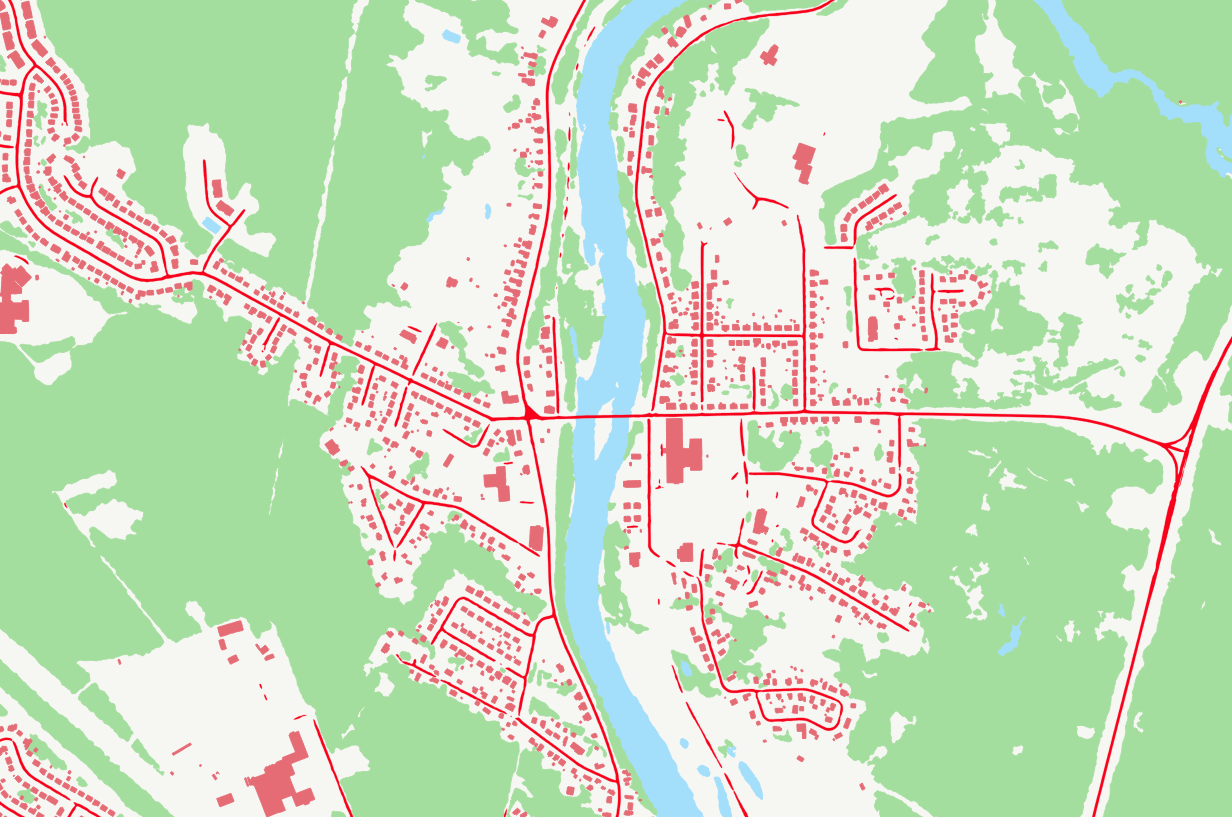
GeoAI are buildings, hydrography, forests, and roads automatically extracted using Deep Learning models applied to a source dataset, typically aerial or satellite images. The primary aim of GeoAI is to increase Canada's availability of high-resolution foundational geospatial data for both spatial and temporal coverage. The infrastructure and expertise put in place by NRCan enables a rapid, efficient, and scalable data creation process through the use of leading-edge technology and Artificial Intelligence models. Published datasets for a given source can be revisited at a later date as more accurate models are developed and put into production. For now, only static files are available, but as the series develops, new products and services will be added. Several use cases of GeoAI data for change detection have been created. To view them, please follow the links below: - Iqaluit: https://open.canada.ca/data/en/dataset/ef29513d-a007-408c-beba-65f86e7b5b01 - Calgary: https://open.canada.ca/data/en/dataset/bd07b597-5166-4b62-ae9c-245b3c62ea03 - Québec City: https://open.canada.ca/data/en/dataset/4026720e-f7fb-478e-a58f-c62ebe20005d - Winnipeg: https://open.canada.ca/data/en/dataset/a6874aac-cfcd-4b92-bb3f-6031eedb5b57 - Victoria: https://open.canada.ca/data/en/dataset/f011c7b9-f79e-42f8-9481-9bf9788bb189 - Trois-Rivières: https://open.canada.ca/data/en/dataset/2b11a323-52c2-43d5-9c09-bc4b15b1bcc8
-

Temporal analysis of changes in Winnipeg, Manitoba, based on GeoAI features automatically extracted from satellite images acquired in 2013 and 2023. Simple geospatial analysis enables the detection of features present in 2023 that were not already there in 2013. The addition of new buildings is a good indicator of urban development and/or sprawl. Complementarily, an analysis of changes in the forest coverage from the GeoAI datasets is done. This analysis reflects the gains and losses between both dates. GeoAI enables temporal coverage of various areas in Canada, thus providing a useful tool for change detection and trend analysis at high resolution. While the series is still fairly new, and such examples are limited for the time being, NRCan strives to gradually increase its GeoAI data offering for both spatial and temporal coverage. For more information about the GeoAI - GeoBase Series, please visit the following link: https://open.canada.ca/data/en/dataset/74738ff5-5367-5958-9aee-98fffdcd1876
-

Temporal analysis of changes in Trois-Rivières, Québec, based on GeoAI features automatically extracted from satellite images acquired in 2013 and 2021-22. Simple geospatial analysis intersecting Statistics Canada's Open Database of Buildings, version 3 (ODB v3) with GeoAI multidate building features enables the detection of buildings observed in 2021-22 that were not detected in 2013. The addition of new buildings is a good indicator of urban development and/or sprawl. GeoAI enables temporal coverage of various areas in Canada, thus providing a useful tool for change detection and trend analysis at high resolution. While the series is still fairly new, and such examples are limited for the time being, NRCan strives to gradually increase its GeoAI data offering for both spatial and temporal coverage. For more information about the GeoAI - GeoBase Series, please visit the following link: https://open.canada.ca/data/en/dataset/74738ff5-5367-5958-9aee-98fffdcd1876
-

Temporal analysis of changes in Calgary, Alberta, based on GeoAI features automatically extracted from satellite images acquired in 2011 and 2021. Simple geospatial analysis intersecting Statistics Canada's Open Database of Buildings, version 3 (ODB v3) with GeoAI multidate building features enables the detection of buildings observed in 2021 that were not detected in 2011. The addition of new buildings is a good indicator of urban development and/or sprawl. Using the same approach, GeoAI multidate roads enable the detection of Statistics Canada's National Roads Network (NRN) segments present in 2021 and/or in 2011. The development of new roads is also indicator of urban development and/or sprawl. Complementarily, an analysis of changes in the forest coverage from the GeoAI datasets is done. This analysis reflects the gains and losses between both dates.. GeoAI enables temporal coverage of various areas in Canada, thus providing a useful tool for change detection and trend analysis at high resolution. While the series is still fairly new, and such examples are limited for the time being, NRCan strives to gradually increase its GeoAI data offering for both spatial and temporal coverage. For more information about the GeoAI - GeoBase Series, please visit the following link: https://open.canada.ca/data/en/dataset/74738ff5-5367-5958-9aee-98fffdcd1876
-

Temporal analysis of changes for Victoria, British Columbia, based on GeoAI features automatically extracted from satellite images acquired in the 2000s, 2010s and 2020s. Simple geospatial analysis intersecting Statistics Canada's Open Database of Buildings, version 3 (ODB v3) with GeoAI multidate building features enables the detection of buildings observed in the 2000s, 2010s and 2020s. The addition of new buildings is a good indicator of urban development and/or sprawl. Using the same approach, GeoAI multidate roads enable the detection of Statistics Canada's National Roads Network (NRN) segments present in the 2000s, 2010s and 2020s. The development of new roads is also indicator of urban development and/or sprawl. Complementarily, an analysis of changes in the forest coverage from the GeoAI datasets is done between the 2000s and the 2020s. This analysis reflects the gains and losses between both dates. GeoAI enables temporal coverage of various areas in Canada, thus providing a useful tool for change detection and trend analysis at high resolution. While the series is still fairly new, and such examples are limited for the time being, NRCan strives to gradually increase its GeoAI data offering for both spatial and temporal coverage. For more information about the GeoAI - GeoBase Series, please visit the following link: https://open.canada.ca/data/en/dataset/74738ff5-5367-5958-9aee-98fffdcd1876
-

Temporal analysis of changes in the Iqaluit region, Nunavut, based on GeoAI features automatically extracted from satellite images acquired in 2012 and 2022. Simple geospatial analysis intersecting GeoAI multidate building features enables the detection of buildings observed in 2022 that were not detected in 2012. The addition of new buildings is a good indicator of urban development and/or sprawl. GeoAI enables temporal coverage of various areas in Canada, thus providing a useful tool for change detection and trend analysis at high resolution. While the series is still fairly new, and such examples are limited for the time being, NRCan strives to gradually increase its GeoAI data offering for both spatial and temporal coverage. For more information about the GeoAI - GeoBase Series, please visit the following link: https://open.canada.ca/data/en/dataset/74738ff5-5367-5958-9aee-98fffdcd1876