 Arctic SDI catalogue
Environmental sciences
Type of resources
Categories
Available actions
Topics
Keywords
Contact for the resource
Provided by
Years
Formats
Representation types
Update frequencies
status
Service types
-
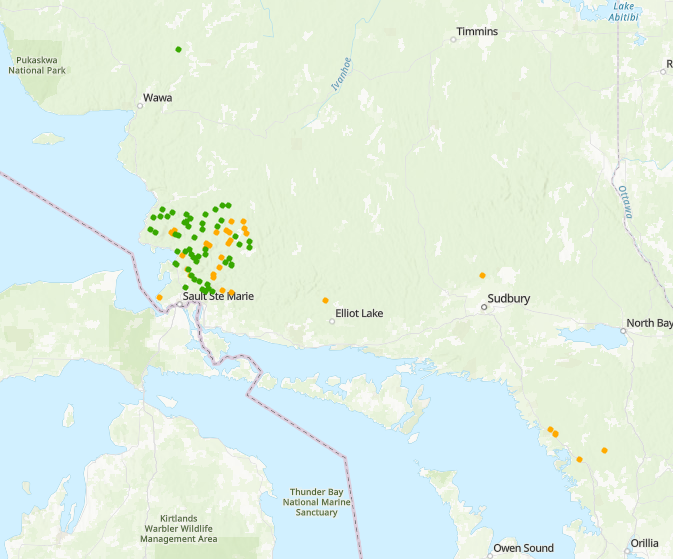
This program summarizes long term water chemistry and chlorophyll a monitoring in north central Ontario lakes developed under Canada’s Long Range Transport of Air Pollutants (LRTAP) initiative to understand and track lake acidification caused by atmospheric deposition. Centered on the intensively studied Turkey Lakes Watershed since 1979 and complemented by broader headwater and mesoscale lake networks around Sault Ste. Marie, Ontario, as well as a few locations near Parry Sound, Ontario, the monitoring integrates catchment scale approaches to link atmospheric inputs, watershed processes, and aquatic responses. Water chemistry measurements quantify acid–base status, major ions, nutrients, and trace metals to diagnose sensitivity to acidification, episodic stress during events such as spring snowmelt, and long term chemical recovery following emission controls. Chlorophyll a is used alongside chemistry to indicate phytoplankton biomass, lake productivity, and overall water quality, providing biological context for fish habitat and ecosystem condition. Together, these coordinated datasets support both detailed process studies and regional assessments of lake sensitivity, productivity, and ecological recovery across a heterogeneous landscape.
-
The Magpie River ramping rate study (2000–2017) investigated the ecological effects of hydroelectric flow regulation on fish, invertebrates, and water quality in the Magpie and Batchawana rivers in the Algoma Region of Ontario. Conducted under a Fisheries and Oceans Canada–Brookfield Renewable partnership, the study employed a Before-After-Control-Impact (BACI) design to assess whether ramping rate restrictions at the Steephill Falls Waterpower Facility improved downstream conditions. Initial restrictions (2002–2005) were later removed, allowing unrestricted flow changes until 2017. In this dataset, monthly sampling from spring to fall included chlorophyll a and water chemistry at multiple sites to monitor productivity and detect irregularities. Analyses followed APHA standard methods, with chlorophyll a, pH, alkalinity, and conductivity processed at Fisheries and Oceans Canada, and major ions and nutrients at the Great Lakes Forestry Centre in Sault Ste. Marie, Ontario. Findings contribute to understanding flow management impacts on river ecosystems.
-
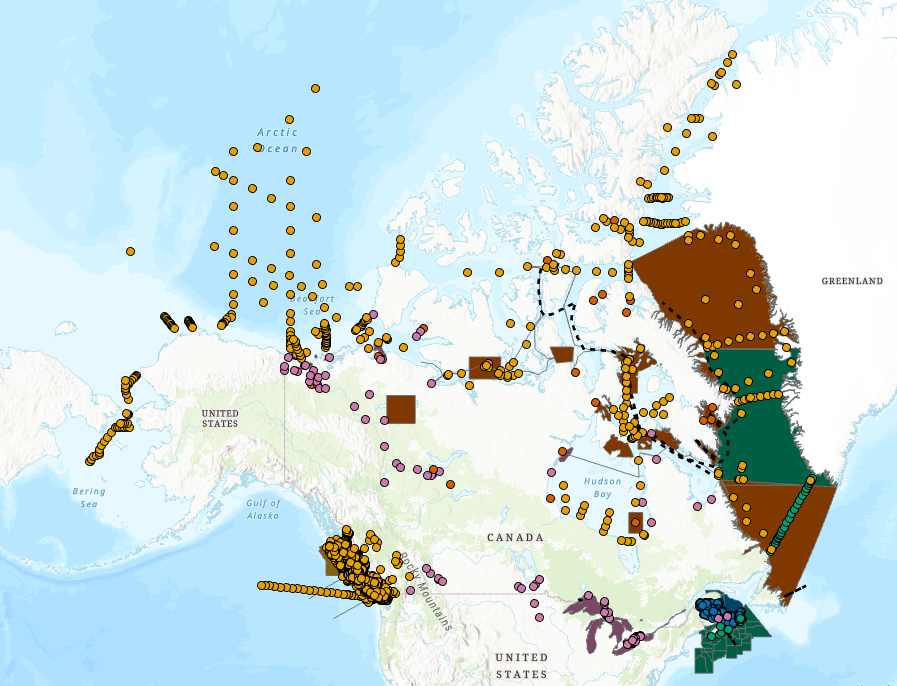
The Fieldnotes dataset provides information about science field work to be conducted each year by Fisheries and Oceans Canada (DFO) and collaborators. Field work takes place in the Pacific, Arctic and Atlantic Oceans, as well as the freshwater bodies of participating DFO Regions: Pacific, Arctic, Ontario and Prairie, Maritimes, and Gulf.
-

Fisheries and Oceans Canada (DFO) conducts research and undertakes monitoring surveys of the marine and freshwater environment in support of sustainable fisheries, healthy aquatic ecosystems and living resources, and safe and effective marine services. In an effort to effectively inform and ensure Canadians feel engaged in the delivery of its science mandate, DFO produces Fieldnotes, an annual compendium of planned science field operations in the North Pacific and Arctic oceans, as well as in the coastal and interior waters of British Columbia and Yukon.
-

The Fieldnotes dataset represents the anticipated locations of DFO Science field operations for 2022-2023 in the North Pacific and Arctic oceans, as well as in the coastal and interior waters of British Columbia and the Yukon.
-

The Fieldnotes dataset represents the anticipated locations of DFO Science field operations for 2021-2022 in the North Pacific and Arctic oceans, as well as in the coastal and interior waters of British Columbia and the Yukon.
-
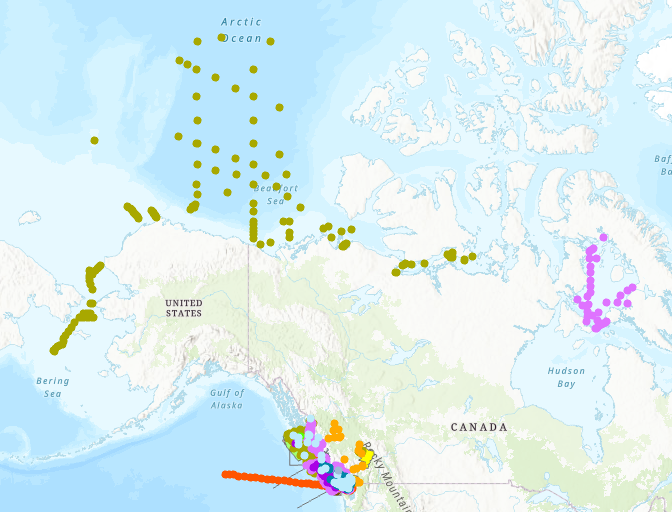
The Fieldnotes dataset represents anticipated locations of science field research and monitoring to be conducted throughout the year by Fisheries and Oceans Canadas' Pacific Science team and collaborators in the Northeast Pacific and Arctic oceans, and in the coastal and interior waters of British Columbia and Yukon.
-

The Fieldnotes dataset represents the anticipated locations of DFO Science field operations for 2020-2021 in the North Pacific and Arctic oceans, as well as in the coastal and interior waters of British Columbia and the Yukon.
-
The Fieldnotes dataset represents the anticipated locations of DFO Science field operations in the North Pacific and Arctic oceans, as well as in the coastal and interior waters of British Columbia and the Yukon.
-
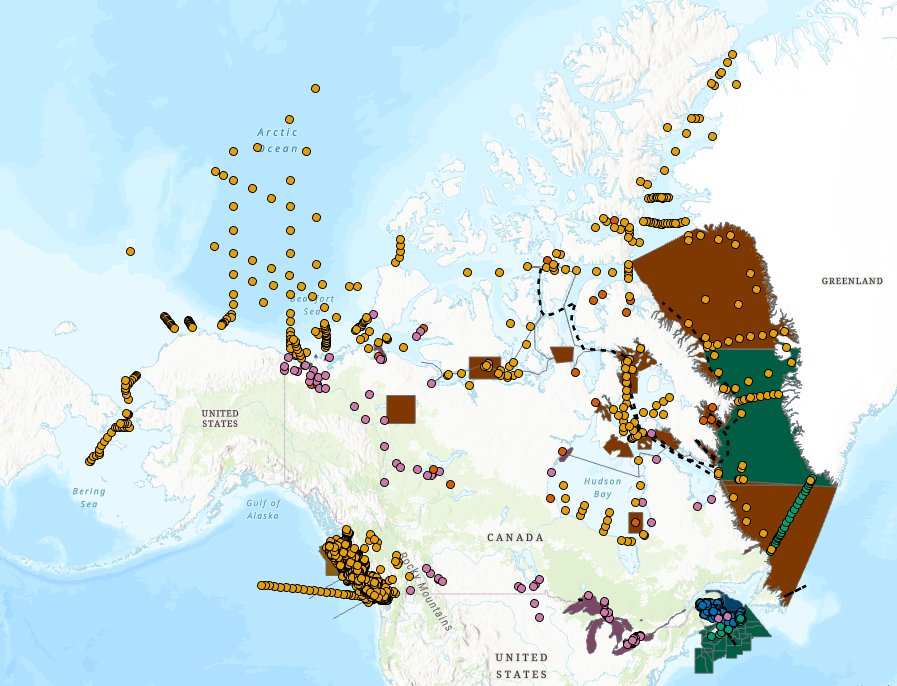
The Fieldnotes dataset provides information about science field work to be conducted each year by Fisheries and Oceans Canada (DFO) and collaborators. Field work takes place in the Pacific, Arctic and Atlantic Oceans, as well as the freshwater bodies of participating DFO Regions: Pacific, Arctic, Ontario and Prairie, Maritimes, and Gulf.