 Arctic SDI catalogue
Computational geoscience, informatics and remote sensing
Type of resources
Available actions
Topics
Keywords
Contact for the resource
Provided by
Formats
Representation types
Update frequencies
status
Scale
-
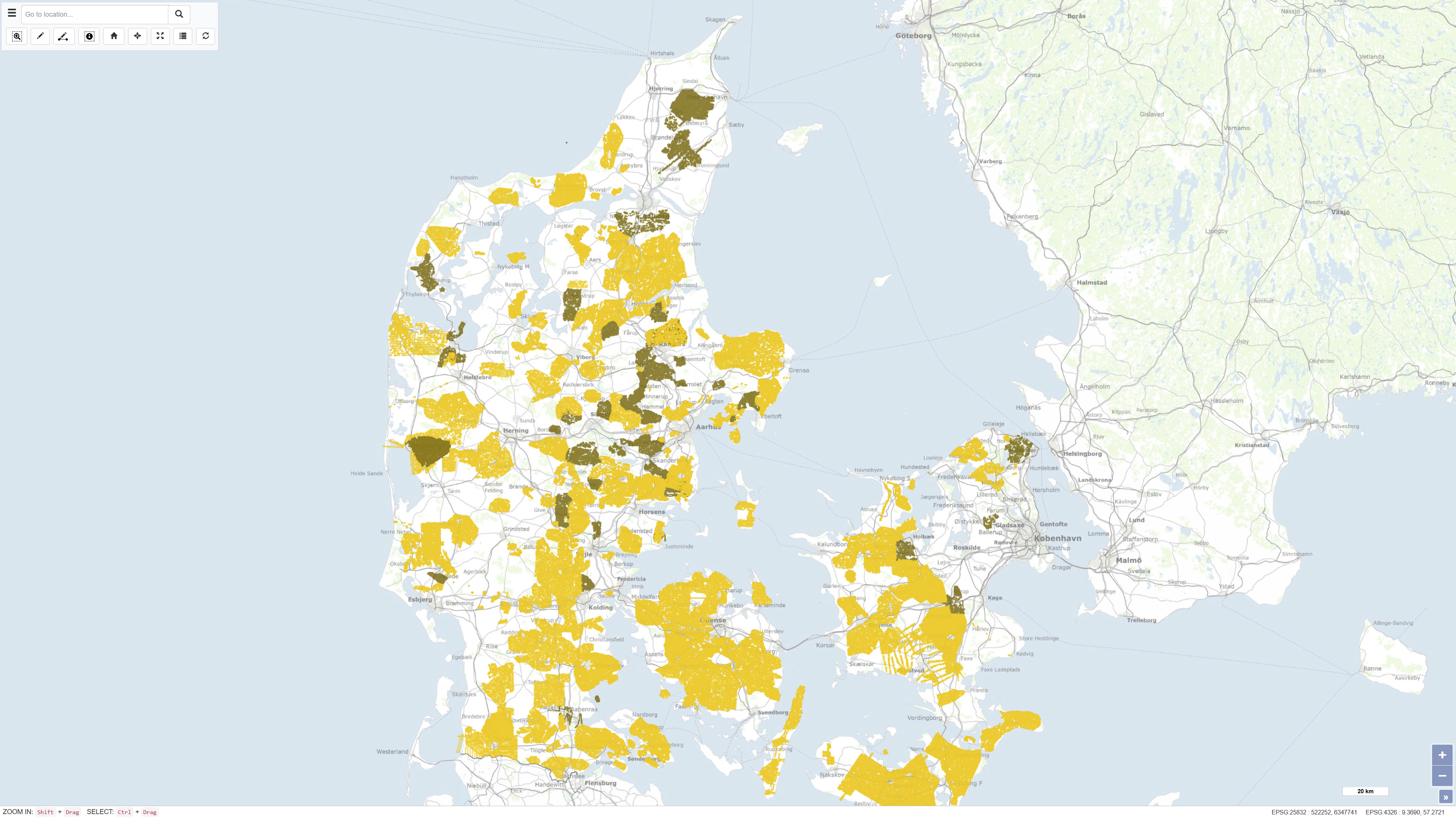
Nationwide geophysical database for environmental and raw material data, also known as GERDA (GEophysical Relational DAtabase). The database contains various types of geophysics, including geoelectrics, electromagnetics, borehole logs and seismic. All data is freely available for download on the GEUS website. The database is updated continuously.
-
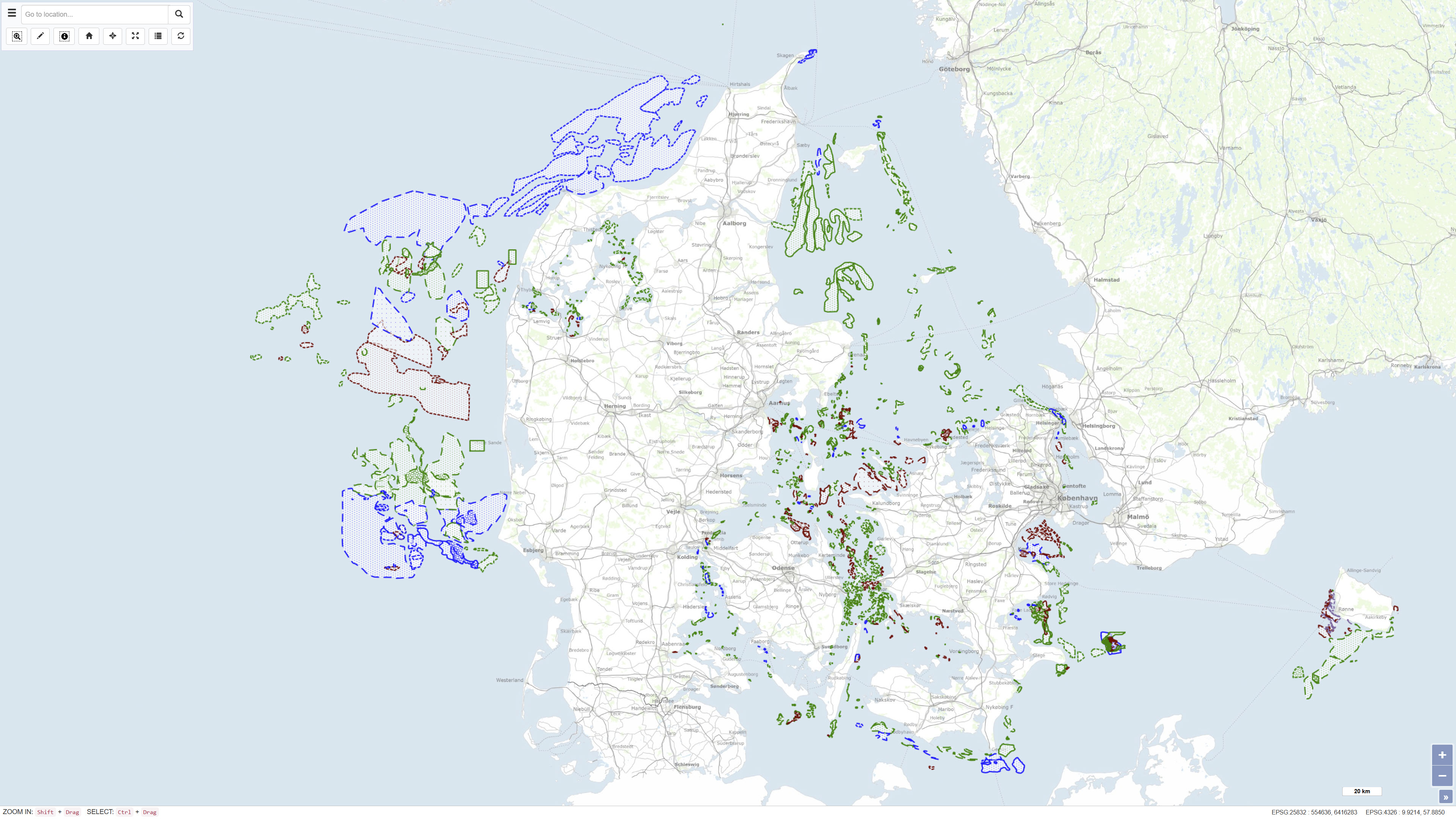
The MARTA database contains shallow seismic and acoustic data, information and geological samples. MATRA shows the distribution of marine sand and gravel resources and gives access to reports on raw material surveys. MARTA shows the distribution of marine sand and gravel resources and gives access to reports on raw material surveys. Data has primarily been acquired by GEUS and our partners., MARTA is the official Danish marine raw material database for data reported in accordance with the Danish Raw Material Act. MARTA is used by the raw materials industry and authorities and as a planning tool in connection with raw material extraction and marine construction projects including beach nourishment.
-
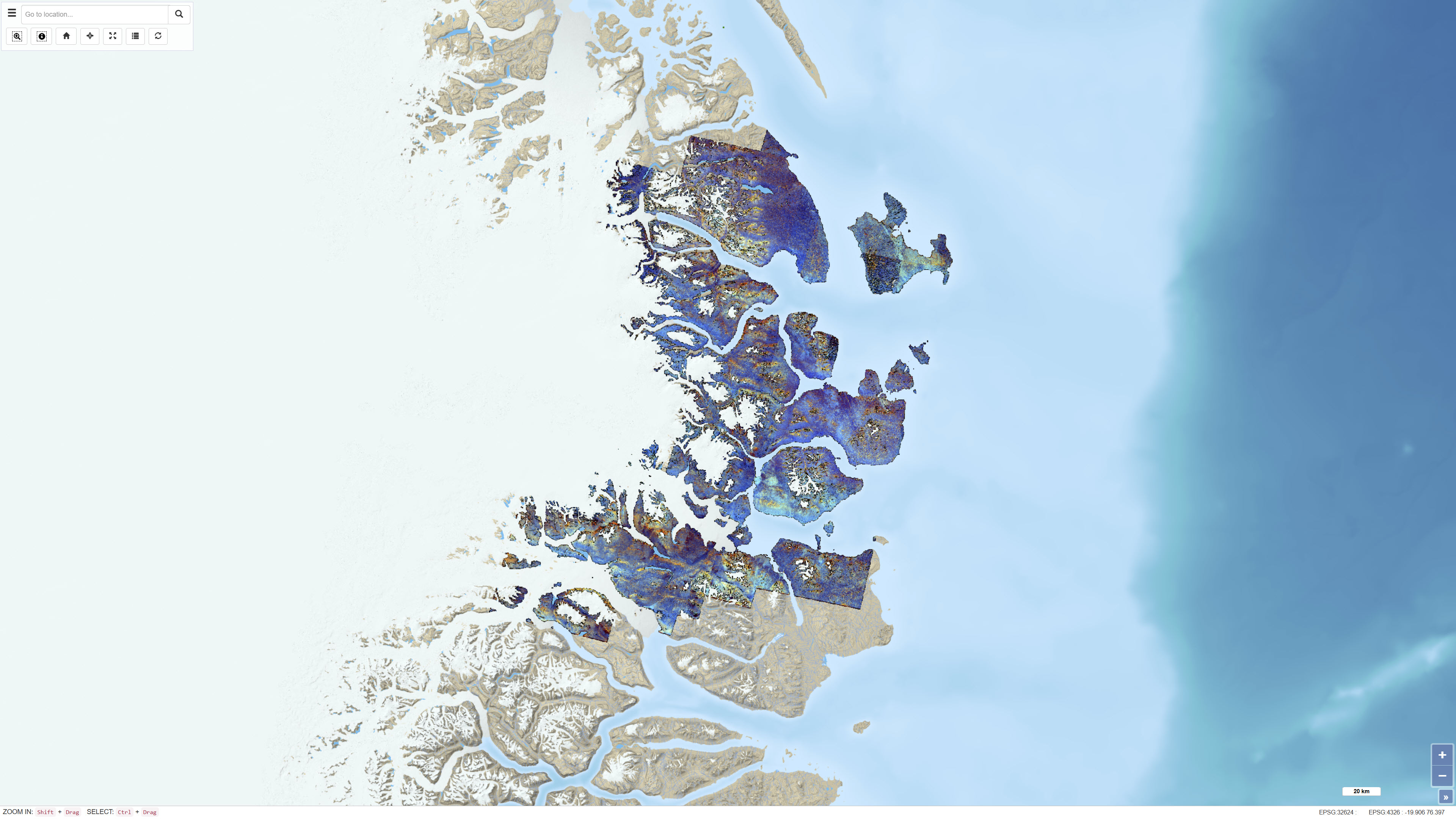
The dataset consists of a series of ASTER band ratios combined into colour composite images designed to highlight mineralogical distributions and lithological variability in Northeast Greenland. The ASTER scenes were preprocessed with atmospheric, radiometric and topographic corrections, including radiative transfer modelling using ATCOR-3 in rugged terrain mode. A surface elevation model was applied to adjust illumination effects. Non-outcrop pixels were masked prior to generating the final mosaic. Calibrated radiance data were converted to apparent surface reflectance; however, further calibration against ground-based reflectance measurements was not feasible. The dataset represents a derived remote sensing product and not primary satellite data.
-
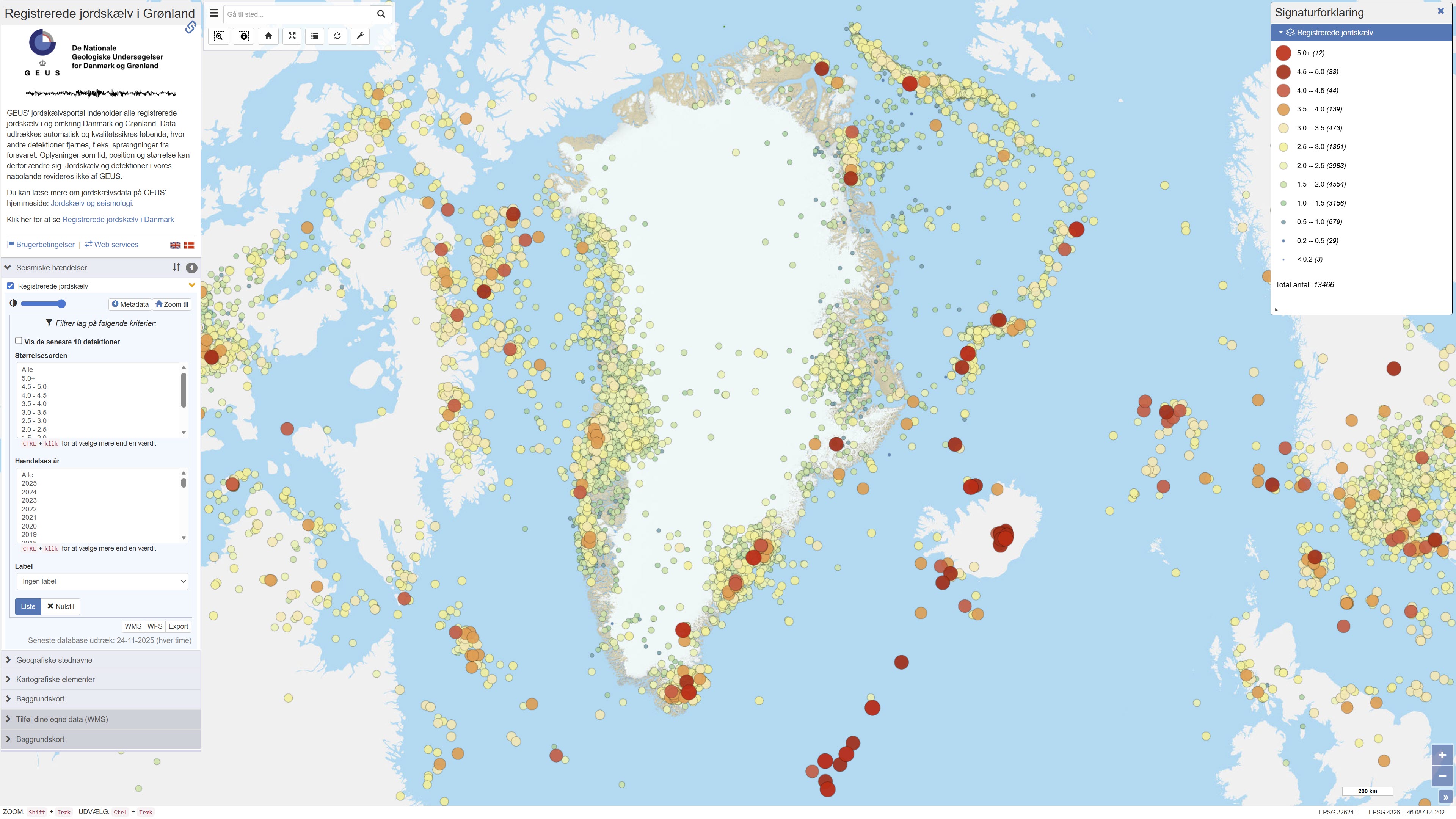
The dataset contains recorded earthquakes and seismic events in Greenland. The data include information on event time, geographic location (epicentre), depth and magnitude for confirmed and suspected earthquakes. The dataset is based on observations from GEUS’ seismic monitoring network and is used for monitoring, research and dissemination of seismic activity in Greenland.
-
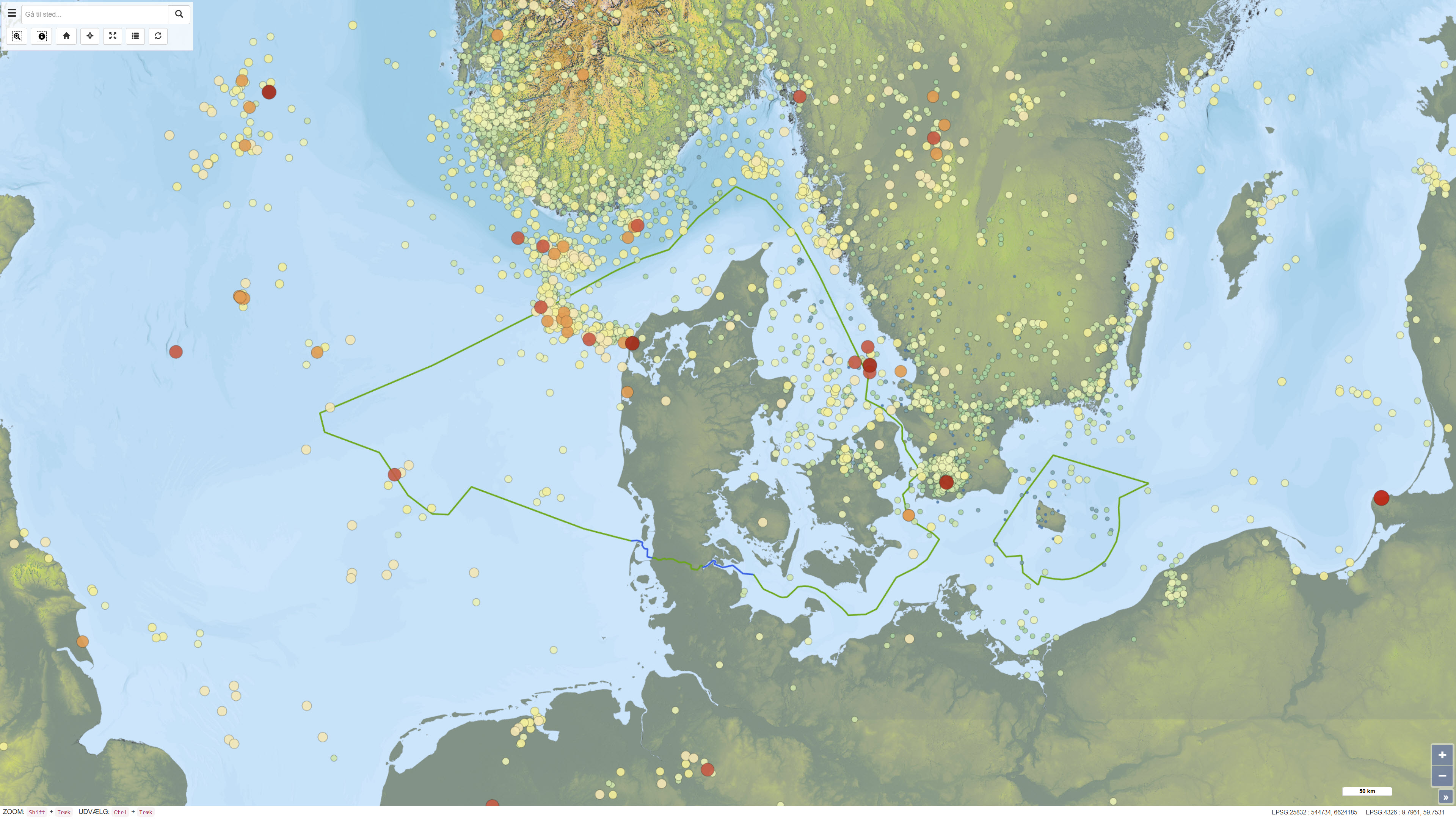
This dataset provides a national overview of all registered earthquakes in Denmark, including time, location, depth and magnitude. The recordings are based on data from GEUS’ national seismic network and comprise both measured earthquakes and subsequently quality-assured observations. The dataset is continuously updated and reflects the best scientific assessment of seismic activity in Denmark, where improved instrumentation and analysis today allow detection of much weaker tremors than historically.
-
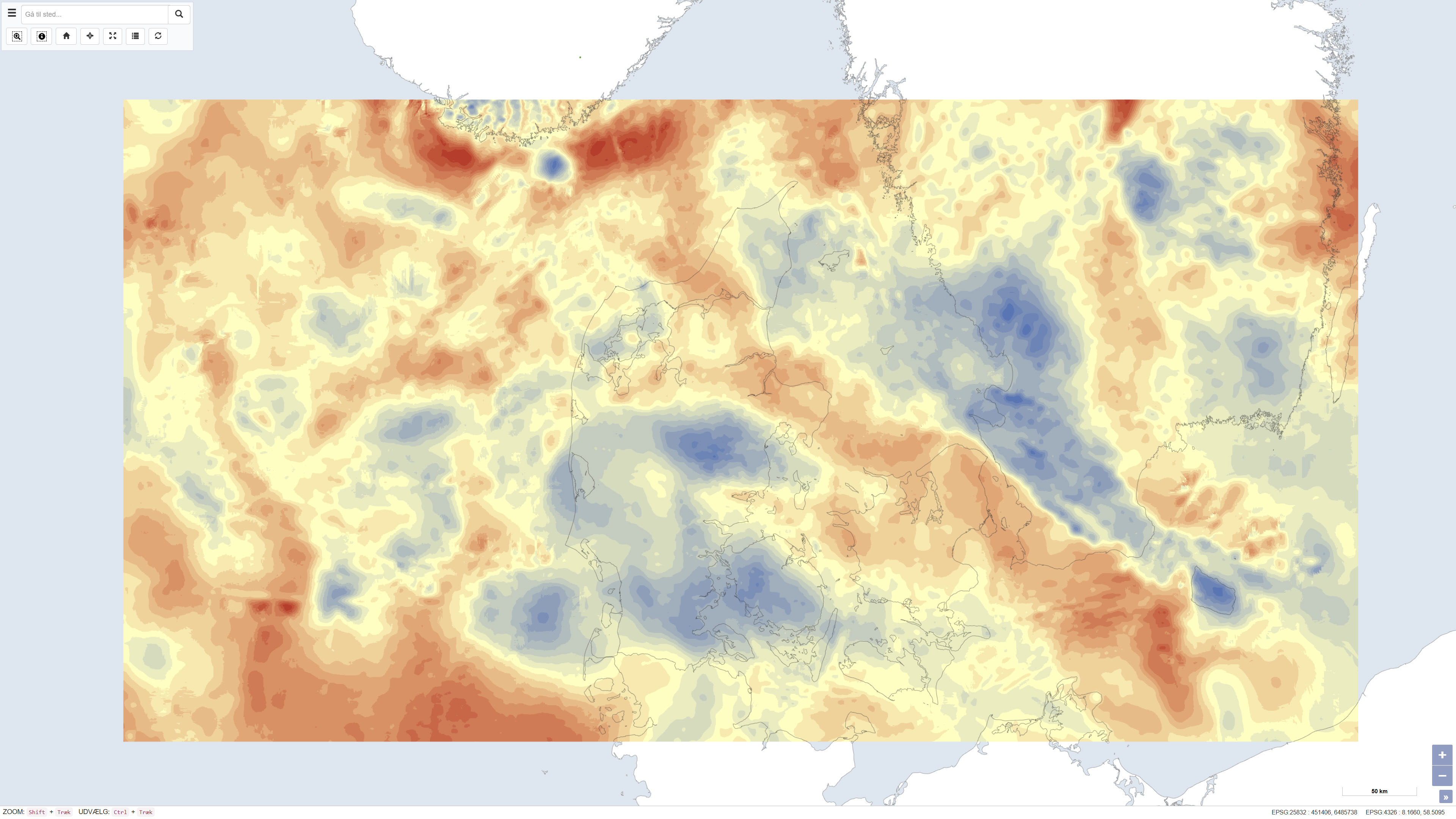
The dataset presents Bouguer gravity anomalies on land and free-air gravity anomalies in Danish marine areas based on gravity measurements from the national gravity database. The Bouguer anomaly is terrain corrected and is used to investigate variations in subsurface mass distribution, while the free-air anomaly at sea reflects variations in the gravity field without full terrain correction. Gravity anomalies are expressed in milligals (mGal). The dataset was produced by DTU Space and represents a consolidated gravimetric foundation for geological and geophysical analyses in Denmark.
-
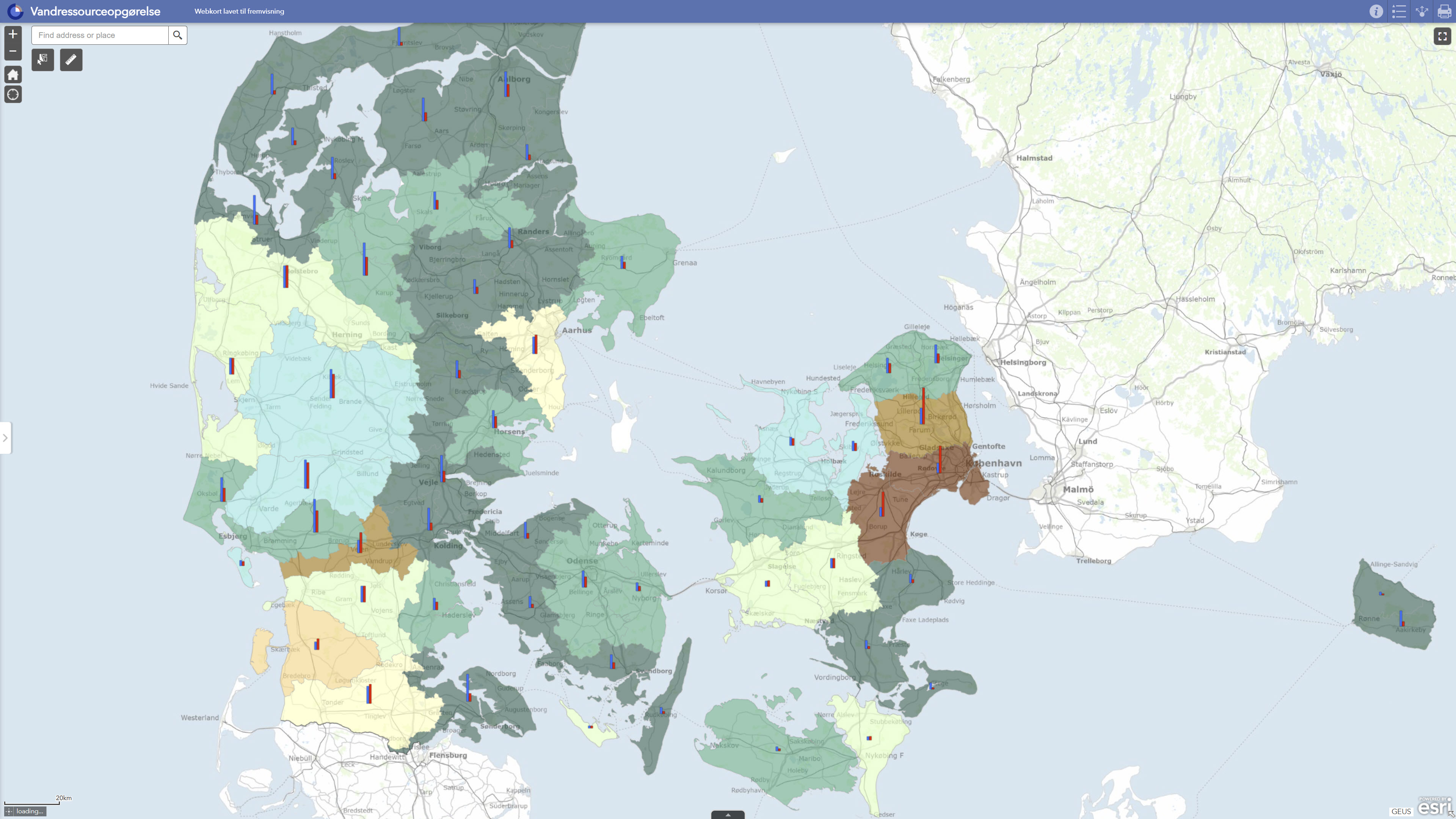
DK model 2019 – Water resources assessment comprises derived results from GEUS’ national hydrological model for Denmark for assessing the use and quantitative status of groundwater resources. The dataset contains model-based assessments of groundwater recharge, water abstraction, exploitation rates, water balance, groundwater drawdown and related assessments at groundwater body level. Exploitation rates are calculated as the ratio between abstraction and groundwater recharge and are used together with information on drawdown and streamflow impacts to assess whether groundwater bodies may be at risk with respect to water balance and quantitative status. The dataset is suitable for regional screening, documentation and overall assessment of groundwater resources, but should not be used as the sole basis for local-scale decisions without additional expert evaluation.
-
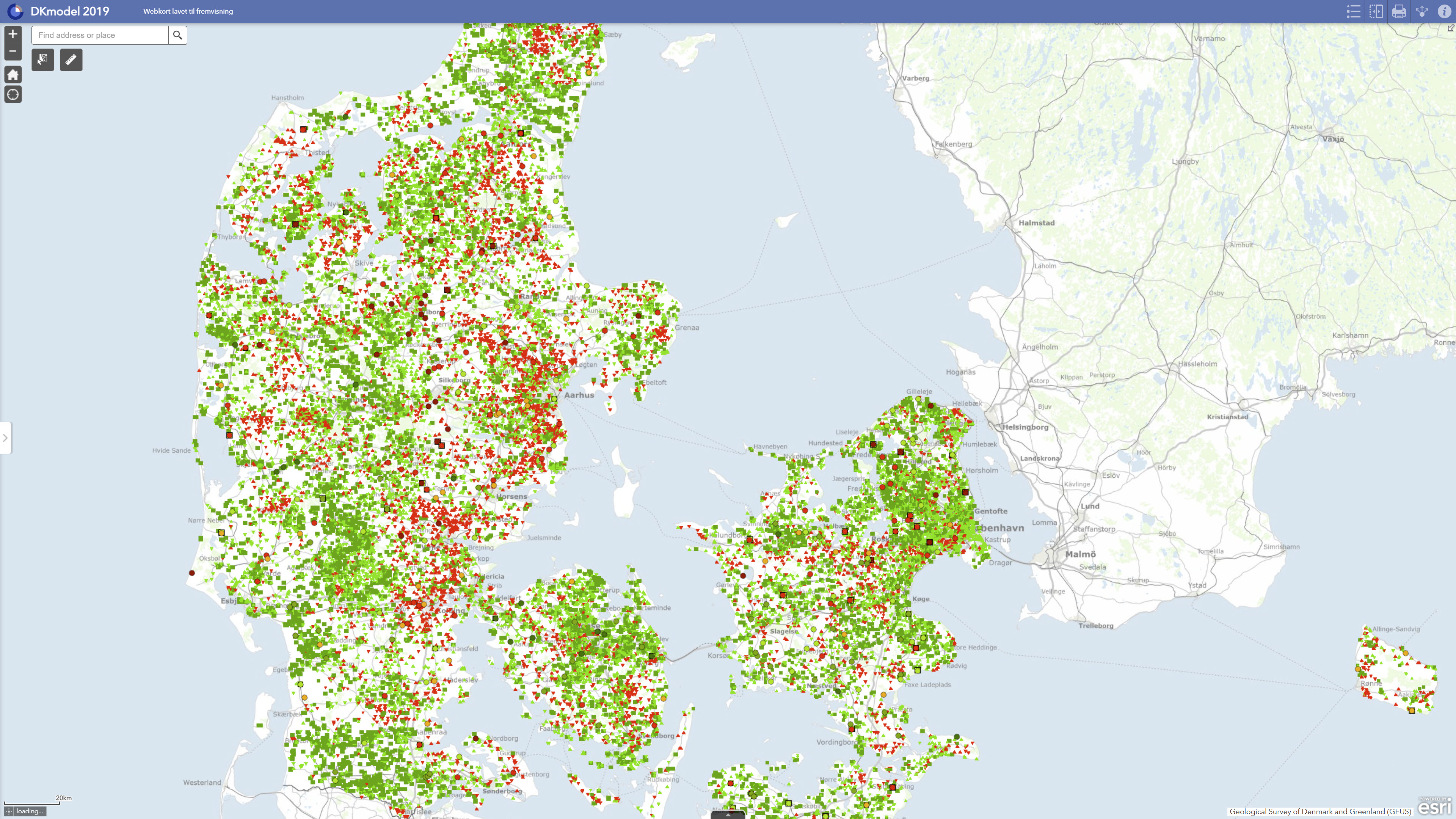
DK model 2019 – Calibration statistics comprises spatial and statistical results from the calibration and evaluation of GEUS’ national hydrological model for Denmark. The dataset documents model performance for groundwater heads and stream discharge, including statistical measures such as RMSE and mean error for groundwater heads as well as WBE, summer WBE and KGE for streamflow simulations. The calibration was carried out using dynamic model runs and inverse parameter estimation with PEST based on observed groundwater heads and daily discharge data for the period 2000–2010. The dataset is intended for assessing the suitability of DK model 2019 for regional analyses, screening and further use. The calibration statistics describe model performance at national and regional scales and should not by themselves be used as documentation of local-scale model accuracy.
-
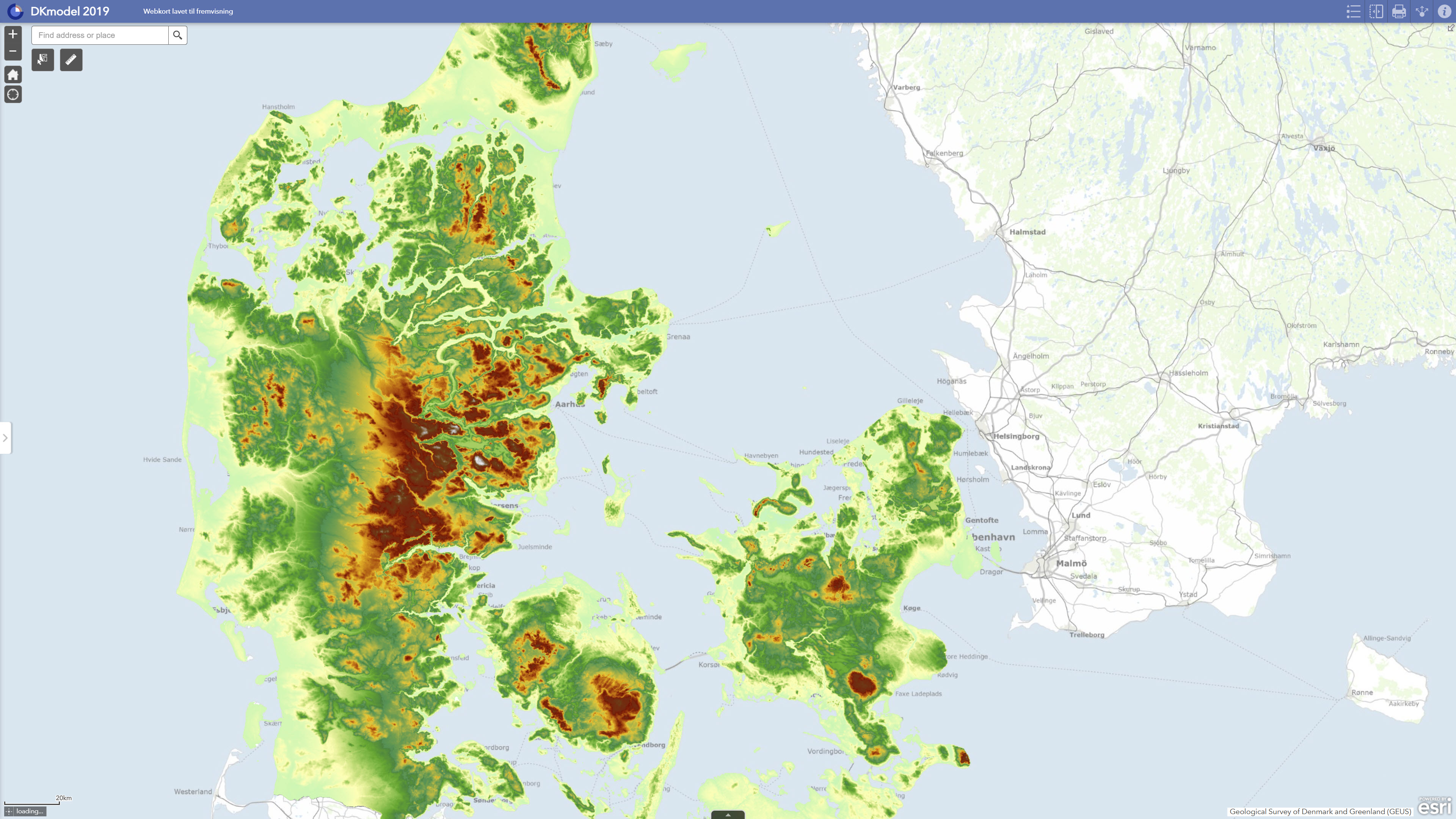
DK model 2019 – Model data comprises core model data from GEUS’ national hydrological model for Denmark. The dataset describes the model basis used in DK model 2019, including the hydrogeological model structure, computational grid, groundwater bodies, climate input, water abstraction data, stream network and other thematic input data included in the model setup. DK model 2019 was updated with new groundwater bodies, new hydrogeological mapping information and a new calibration against observed groundwater heads and stream discharge. The model data form the basis for calculations of groundwater recharge, water balance, water abstraction, drawdown, exploitation rates and impacts on streams. The dataset is suitable as documentation of the model basis and as input to regional analyses, screening and further modelling studies, but should not be used directly for local-scale issues without a separate assessment.
-
%20-%20datas%C3%A6t.jpg)
The dataset contains aeromagnetic measurements acquired during 1993–1996 in East and North-East Greenland as part of the AWI-AEROMAG project conducted by the Alfred Wegener Institute (AWI). The measurements represent regional airborne magnetometry and include total magnetic field intensity corrected for diurnal variations and the main geomagnetic field. The survey was carried out to support geological mapping and tectonic analysis of eastern Greenland. The dataset constitutes an important geophysical reference for studies of crystalline basement rocks, sedimentary basins and structural features in the region.