 Arctic SDI catalogue
GeoJSON
Type of resources
Available actions
Topics
Keywords
Contact for the resource
Provided by
Years
Formats
Representation types
Update frequencies
status
Scale
-
DMI foretager en lang række punktmålinger på sine målestationer i Danmark og Grønland. Målingerne er en automatisk proces, hvor vind, nedbør, temperatur, og vandstand måles, og data videresendes til DMI. Observationsdata er såkaldte rå-data, hvilket betyder, at de ikke er kvalitetskontrollerede eller på anden vis behandlede. Der kan således forekomme fejlbehæftede målinger, hvilket typisk skyldes, at måleinstrumenter er blevet slidte eller ødelagte af vind og vejr, i sjældne tilfælde har været udsatte for hærværk. DMI arbejder løbende med kvalitetssikring og vedligeholdelse af sine måleinstrumenter med henblik på at leve op til anbefalingerne fra WMO. Man skal derfor være opmærksom på risikoen for fejlbehæftede målinger, hvis man anvender DMI’s meteorologiske observationsdata. De meteorologiske observationer angives i UTC-tid, og målingerne følger anbefalingerne fra FN's organisation for meteorologi, World Meteorological Organization (WMO) og den internationale oceanografiske kommision (IOC - UNESCO).
-
Klimadata omfatter kvalitetskontrollerede meteorologiske observationer. Klimadata er tilgængelig som: 1. Stationsdata både for Danmark og Grønland 2. Arealdata kun for Danmark
-
Results from laboratory analyses of related to monitoring the quality of water wells and drinking water taps in household. This dataset is part of GEUS' nation-wide database for shallow boreholes, the common public database and is part of Denmarks Environmental Portal. The database is publicly available and is continually updated.
-
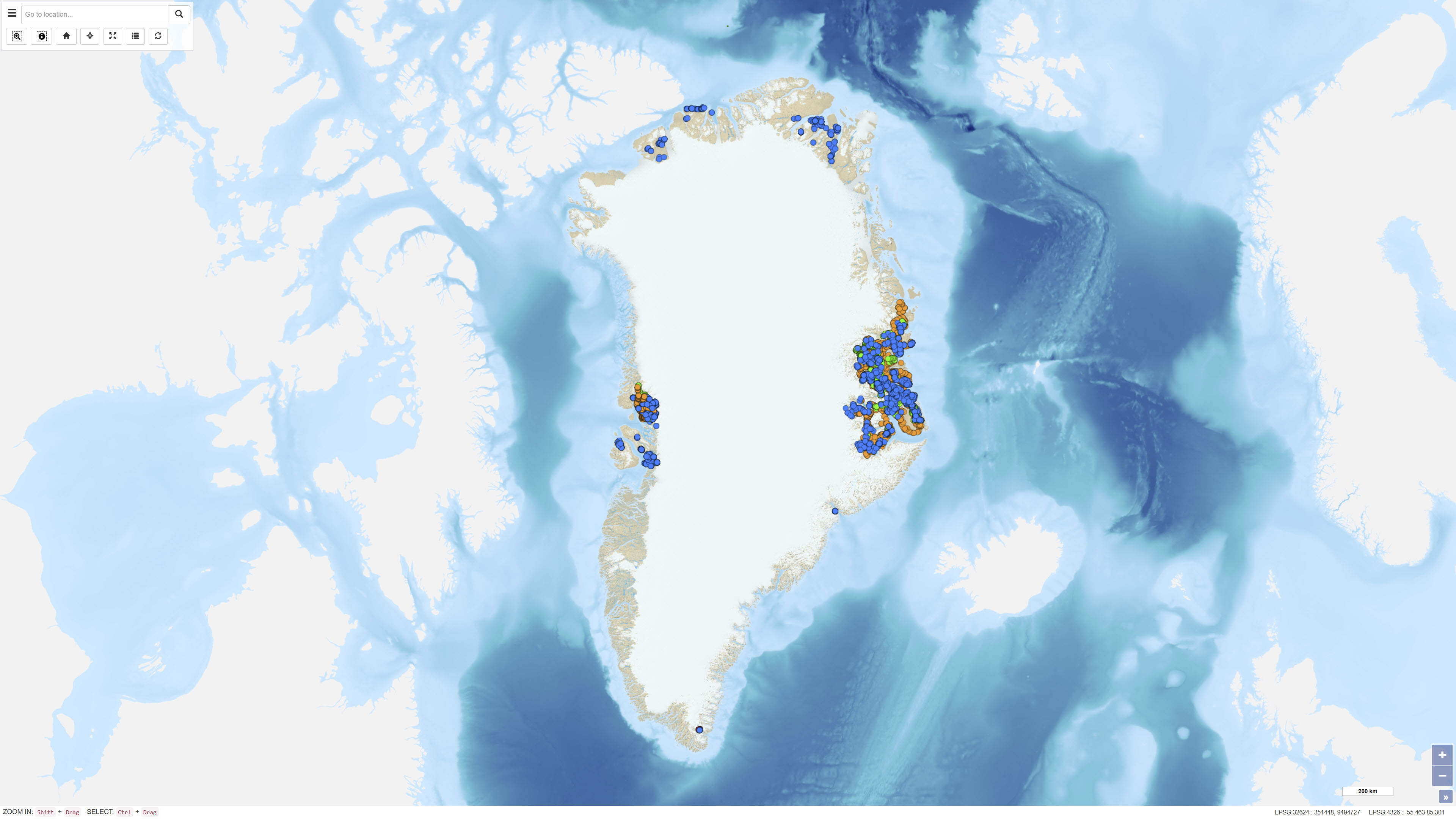
The dataset contains geochemical sample data from four company reports submitted to the Ministry of Mineral Resources (MMR) and previously to the Geological Survey of Denmark and Greenland (GEUS). The reports were originally delivered in paper format and later scanned. The geochemical data have been digitally restored through optical character recognition of scanned documents and georeferencing of sample locations. The dataset has been uploaded to the GEUS sample database with necessary adjustments to sample names and metadata. The dataset includes samples with coordinates but without geochemical analyses, as well as samples with analyses lacking unambiguous coordinates.
-
%20-%20datas%C3%A6t.jpg)
The Greenland Mineral Occurrences Map (GMOM) dataset contains a compilation of geological information on known mineral occurrences in Greenland. For each occurrence, information includes geographic location, size, mineral commodities, mineralisation type, exploration history and a geological description. The data have been collected and compiled from published scientific articles, exploration reports submitted to the authorities in Greenland, and direct geological observations made during fieldwork conducted by geological surveys, academic researchers and mineral exploration companies. The dataset represents a synthesis of existing knowledge on mineral occurrences in Greenland.
-
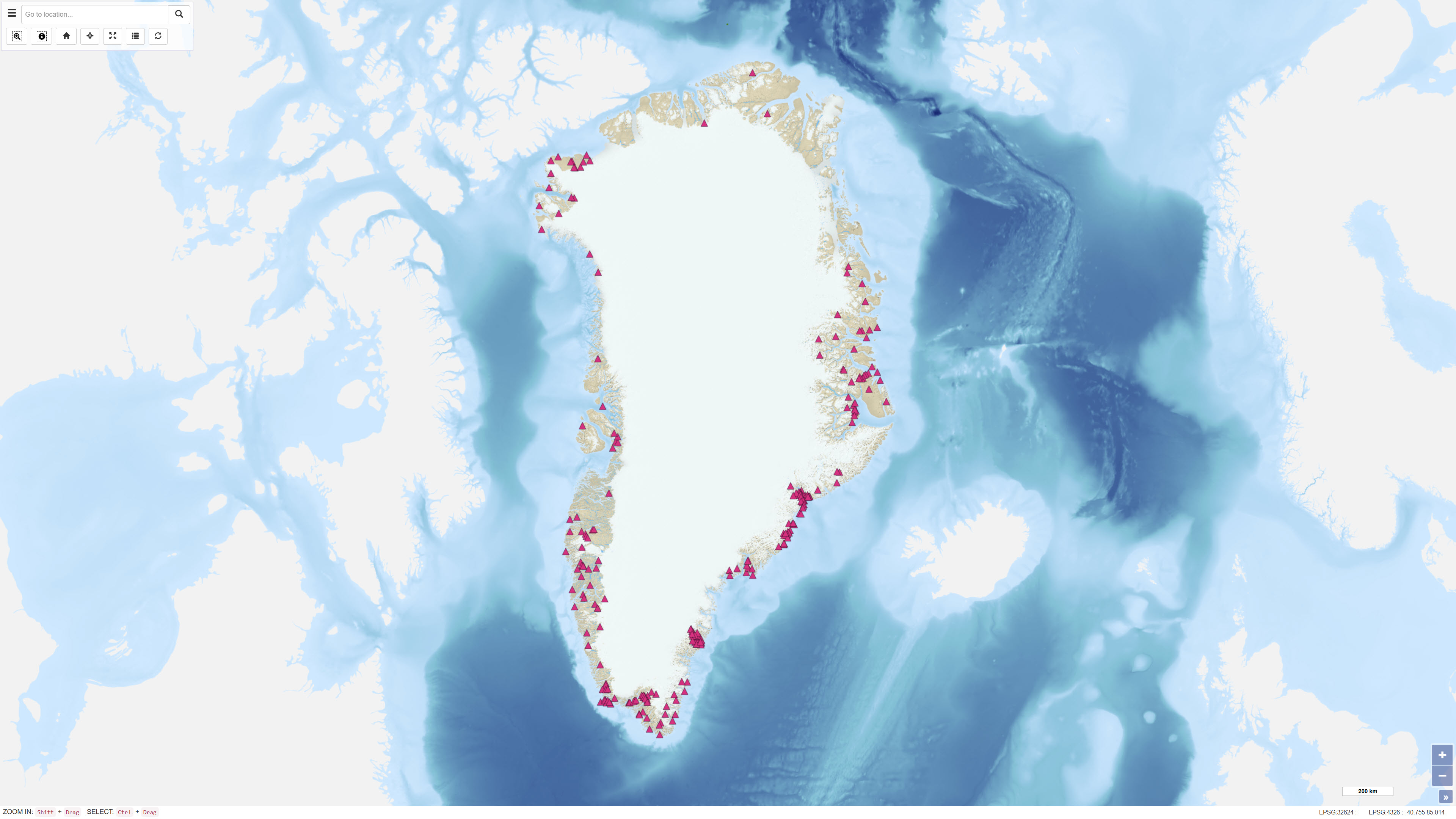
This dataset describes the intrusions and magmatic complexes of Greenland, forming a dedicated information layer within the GEUS GMOMDB2 database, displayed via the Greenland Mineral Occurrence Map (GMOM2). It includes 194 registered intrusions and complexes grouped into 23 magmatic provinces. The data are compiled from GEUS geological maps, published sources, and company reports. The Palaeogene intrusions and complexes of East Greenland (66–75°N) are related to the opening of the North Atlantic and the influence of the ancestral Icelandic mantle plume. The magmatic evolution includes flood basalts, dyke swarms, and intrusive activity from 61 to 13 Ma. Economic mineralisation is documented in several complexes, including the Skaergaard palladium deposit and the Malmbjerg porphyry molybdenum deposit, representing classic examples of rift- and post-rift-related mineral systems. The dataset provides harmonised, quality-controlled geological information to support exploration and research activities in Greenland.
-
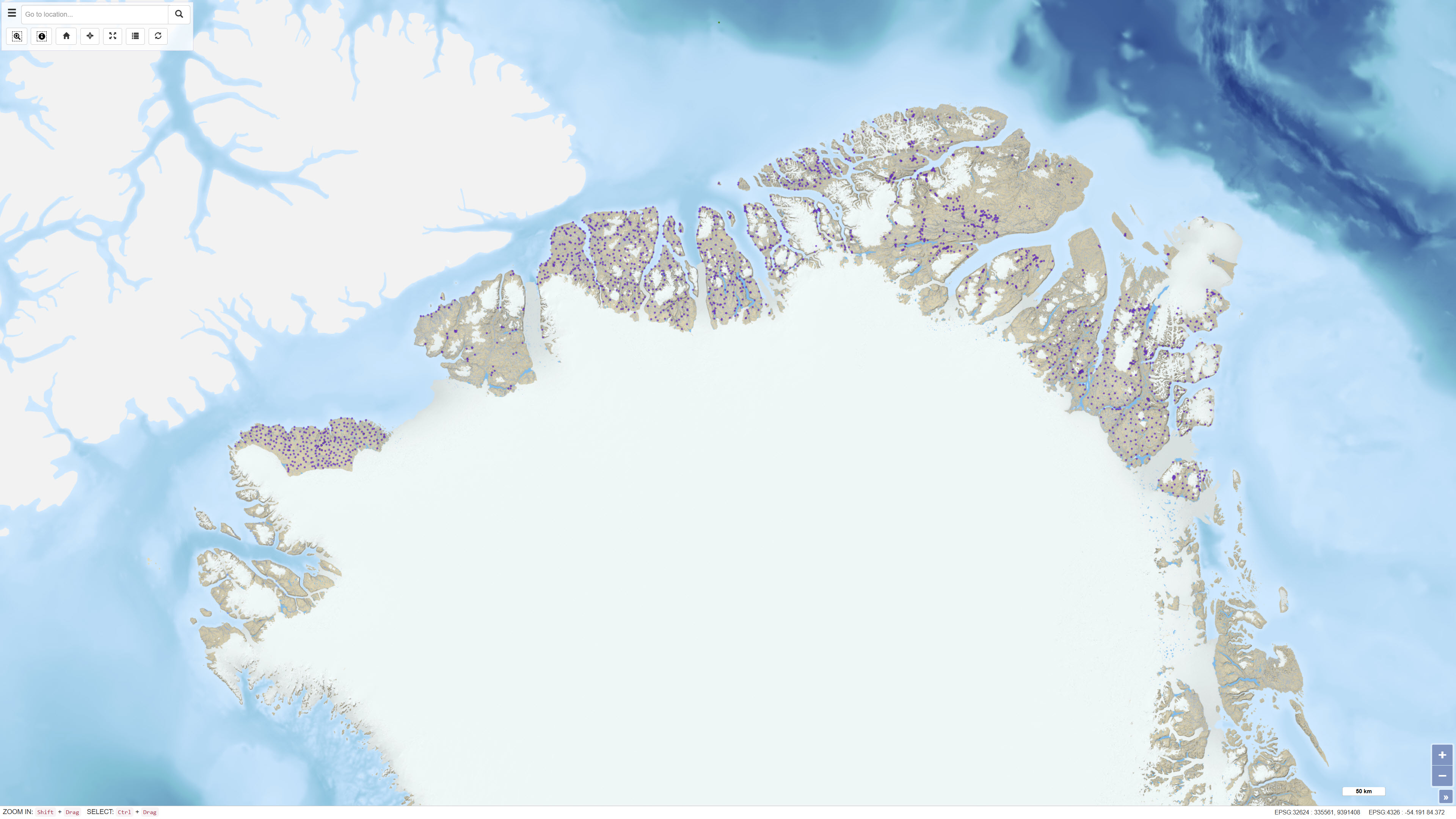
This dataset comprises calibrated geochemical data from stream sediment and soil samples collected in North Greenland between 1978 and 1999, supplemented by extensive reanalyses in 2011. The dataset includes selected elements relevant for the evaluation of zinc mineralisation: CaO, K₂O, Ba, Cu, Sr and Zn. A total of 2,469 stream sediment samples and 204 soil samples were included. The analytical values represent the most reliable results following systematic quality control and calibration procedures designed to eliminate bias between analytical methods and analytical periods, as described in Thrane et al. (2011). All values below detection limit are coded as 0 in the dataset. The dataset supports regional assessment of geochemical patterns and mineral potential in North Greenland.
-
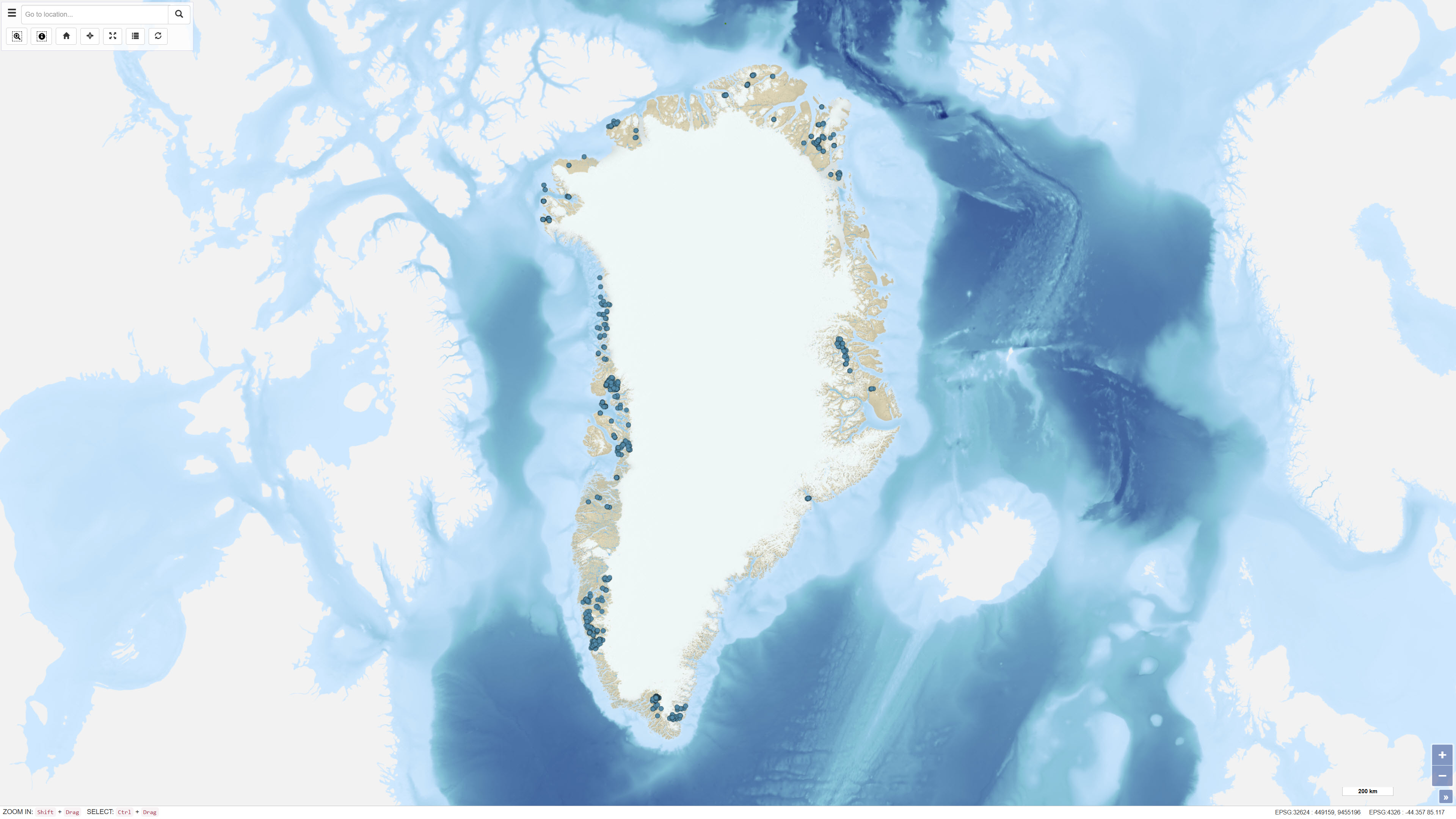
The dataset contains geochemical analytical results for 725 heavy mineral concentrate samples collected by GEUS in Greenland as part of various geological mapping and mineral exploration activities. The samples originate from several campaigns, including a regional campaign conducted between 1982 and 1986 in the Nuuk area, a 1991 campaign in the southern Nuuk region, and samples collected in 2003 in the Qaanaaq region. Additional samples derive from smaller projects and campaigns with limited documentation. Analyses were carried out at different laboratories, including Activation Laboratories and Bondar-Clegg in Canada and Risø National Laboratory in Denmark. The dataset contains raw analytical results, and metadata concerning sampling procedures and analytical quality are not complete for all samples.
-
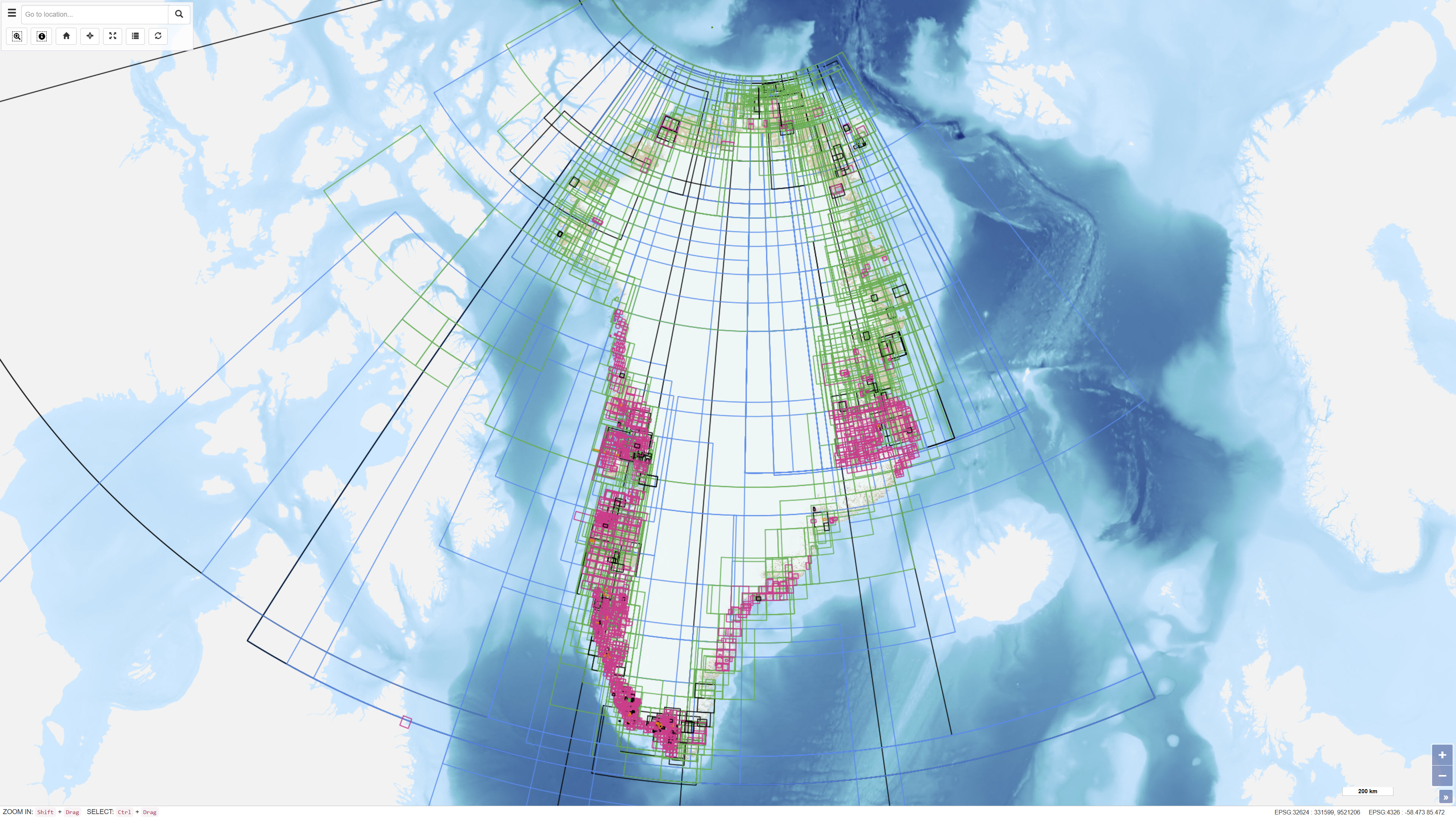
The dataset represents an index layer showing the geographic extent of archived and unpublished historical geological maps and sections from Greenland. The layer functions as a search and reference tool and does not contain the original map material. The dataset supports identification and access to historical geological archive documents.
-
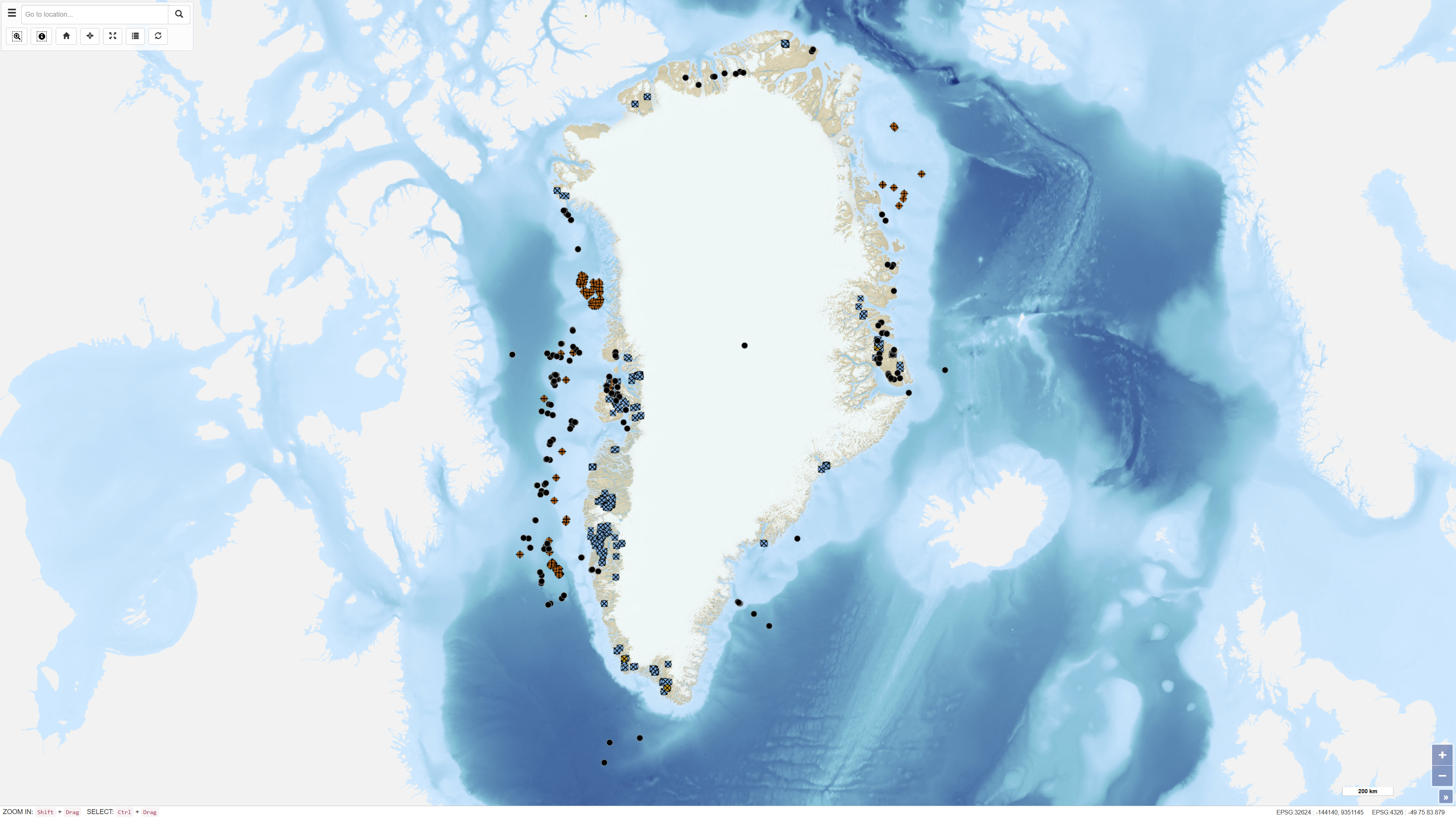
The dataset contains basic information on the location of onshore and offshore drillholes in Greenland established for scientific research as well as mineral, oil and gas exploration. The dataset functions as a geographic reference layer and, where available, includes links to reports or summary sheets representing the original source of information. The dataset covers drillholes established between 1948 and 2019 and is subject to continuous updates as new information becomes available through scientific publications, press releases and company documentation.