 Arctic SDI catalogue
Economic geology
Type of resources
Available actions
Topics
Keywords
Contact for the resource
Provided by
Formats
Representation types
Update frequencies
status
Scale
-
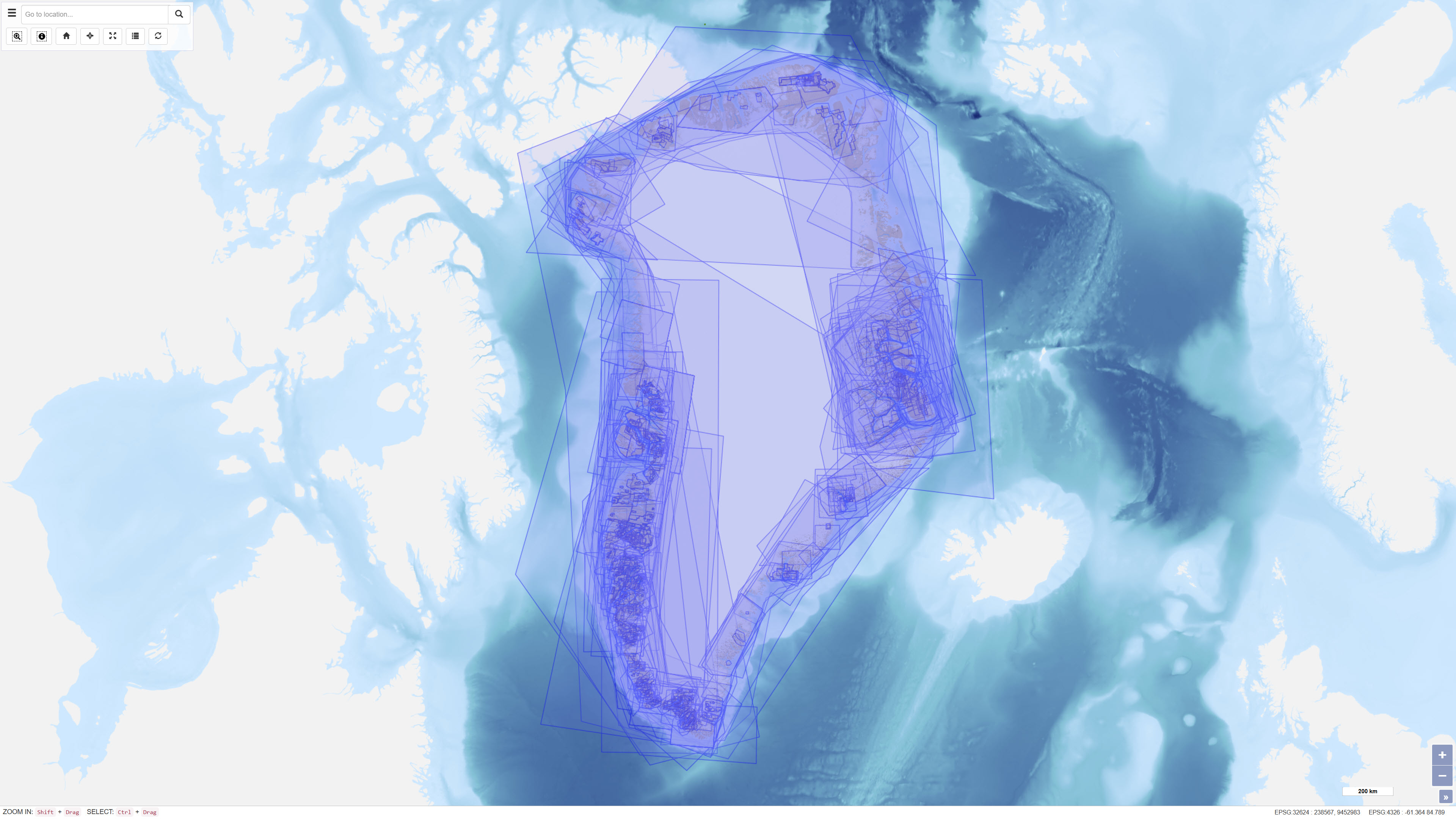
This dataset provides access to non-confidential mineral exploration licence reports and other geoscientific reports submitted to the Greenlandic authorities in accordance with the Mineral Resources Act of Greenland (effective 1 January 2010) and associated regulations. The reports are subsequently transferred to GEUS for archiving and dissemination. The database allows users to search reports using alphanumeric and geographic criteria, to access report metadata and to download available reports as PDF files. The dataset supports transparency and accessibility of geoscientific information related to mineral exploration activities in Greenland.
-
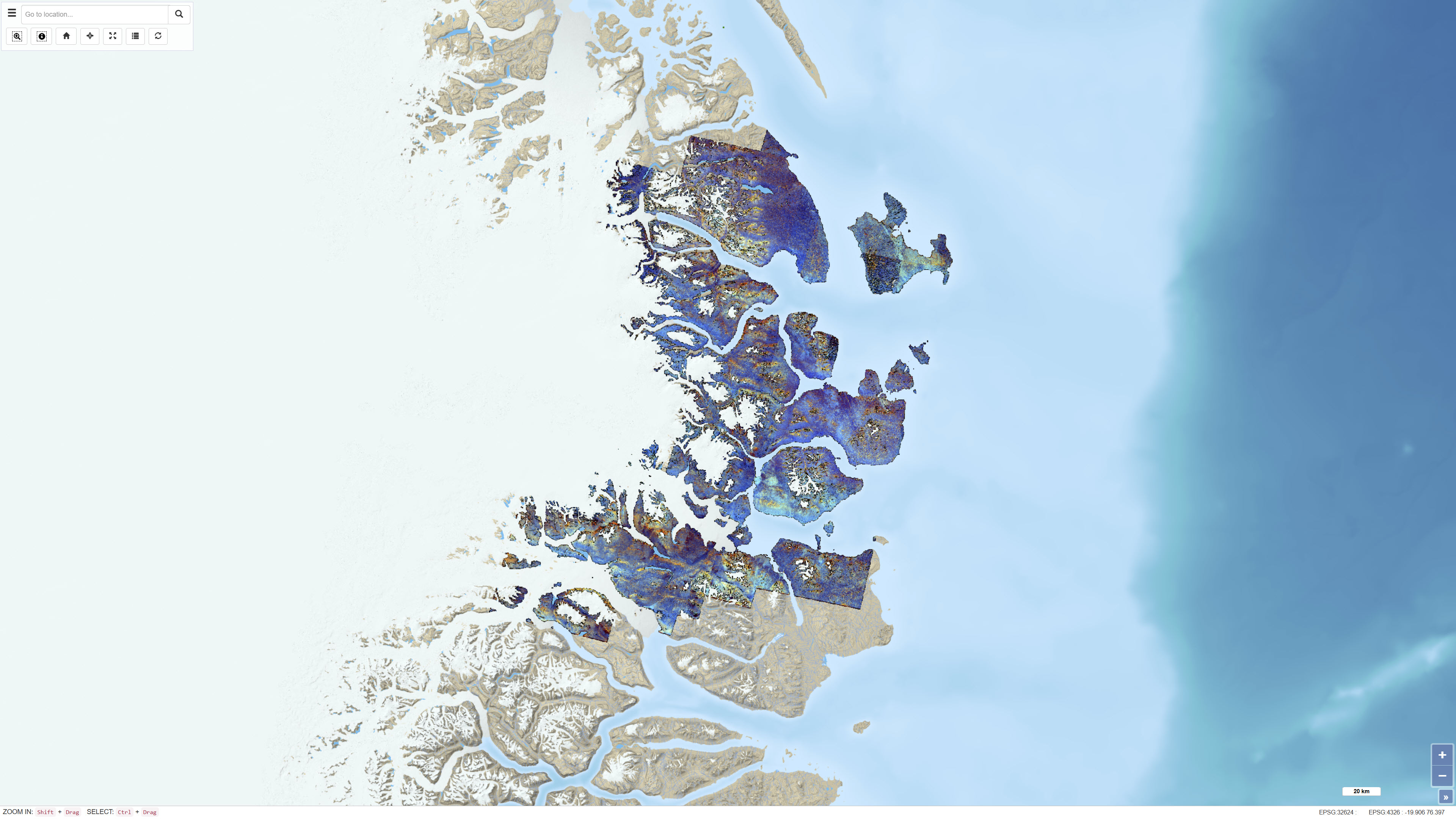
The dataset consists of a series of ASTER band ratios combined into colour composite images designed to highlight mineralogical distributions and lithological variability in Northeast Greenland. The ASTER scenes were preprocessed with atmospheric, radiometric and topographic corrections, including radiative transfer modelling using ATCOR-3 in rugged terrain mode. A surface elevation model was applied to adjust illumination effects. Non-outcrop pixels were masked prior to generating the final mosaic. Calibrated radiance data were converted to apparent surface reflectance; however, further calibration against ground-based reflectance measurements was not feasible. The dataset represents a derived remote sensing product and not primary satellite data.
-
%20i%20Gr%C3%B8nland%20-%20datas%C3%A6t.jpg)
The dataset contains polygons representing active Small Scale Exclusive Licences (SSE) in Greenland. SSE licences are granted to individuals or small companies for small-scale mineral activities. The data are based on geographic information provided via WFS by the Ministry of Mineral Resources in Greenland and are redistributed without modification of the original boundaries. The dataset provides an overview of areas with valid small-scale licences.
-
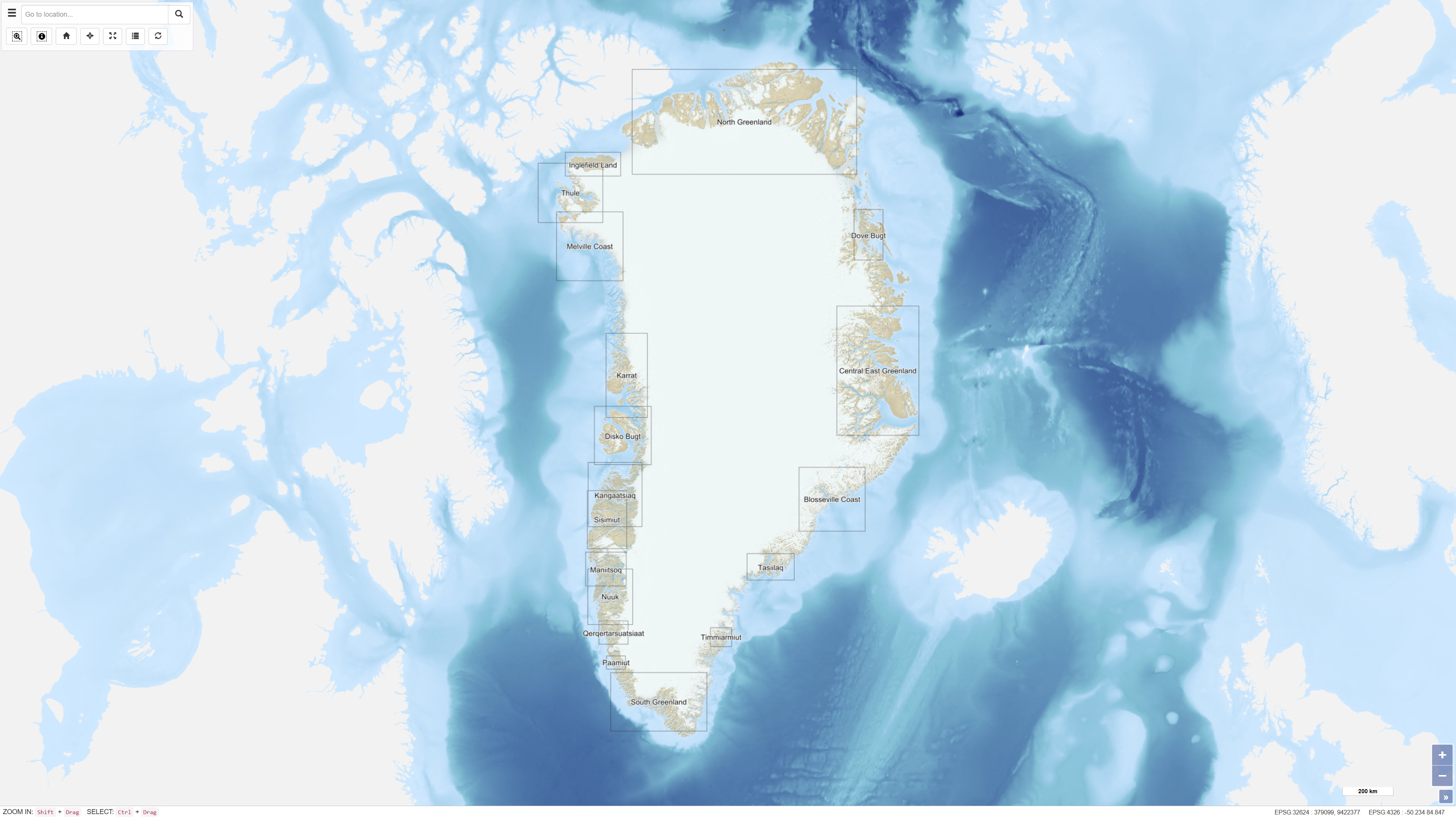
The dataset contains a summary of geological information for known mineral occurrence regions in Greenland. The information includes the geographic location, size, mineral commodities, mineralisation type, exploration history and a geological description of each occurrence or deposit. The data have been collected and compiled from field investigations conducted by geological surveys, academic researchers and mineral exploration companies. The dataset represents a regional synthesis of mineral occurrence information and provides an overview of the spatial distribution and geological context of known mineral resources in Greenland.
-
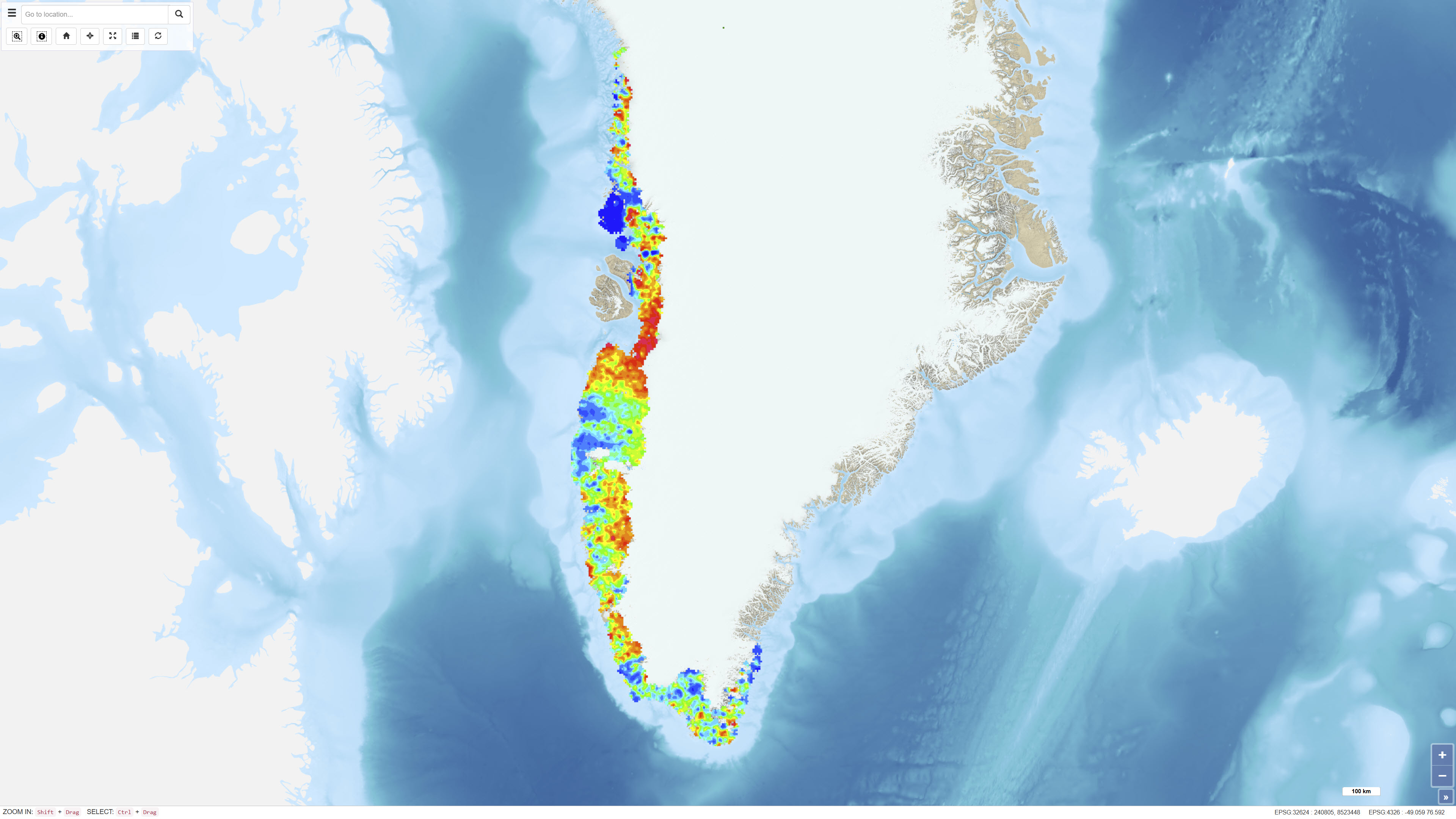
The dataset comprises digital element distribution maps based on geochemical analyses of stream sediments collected in West and South Greenland. The maps were produced as part of the geochemical mapping programme underlying the Geochemical Atlas of West and South Greenland. The data represent analyses of various elements in defined grain-size fractions and provide a regional overview of geochemical variations.
-
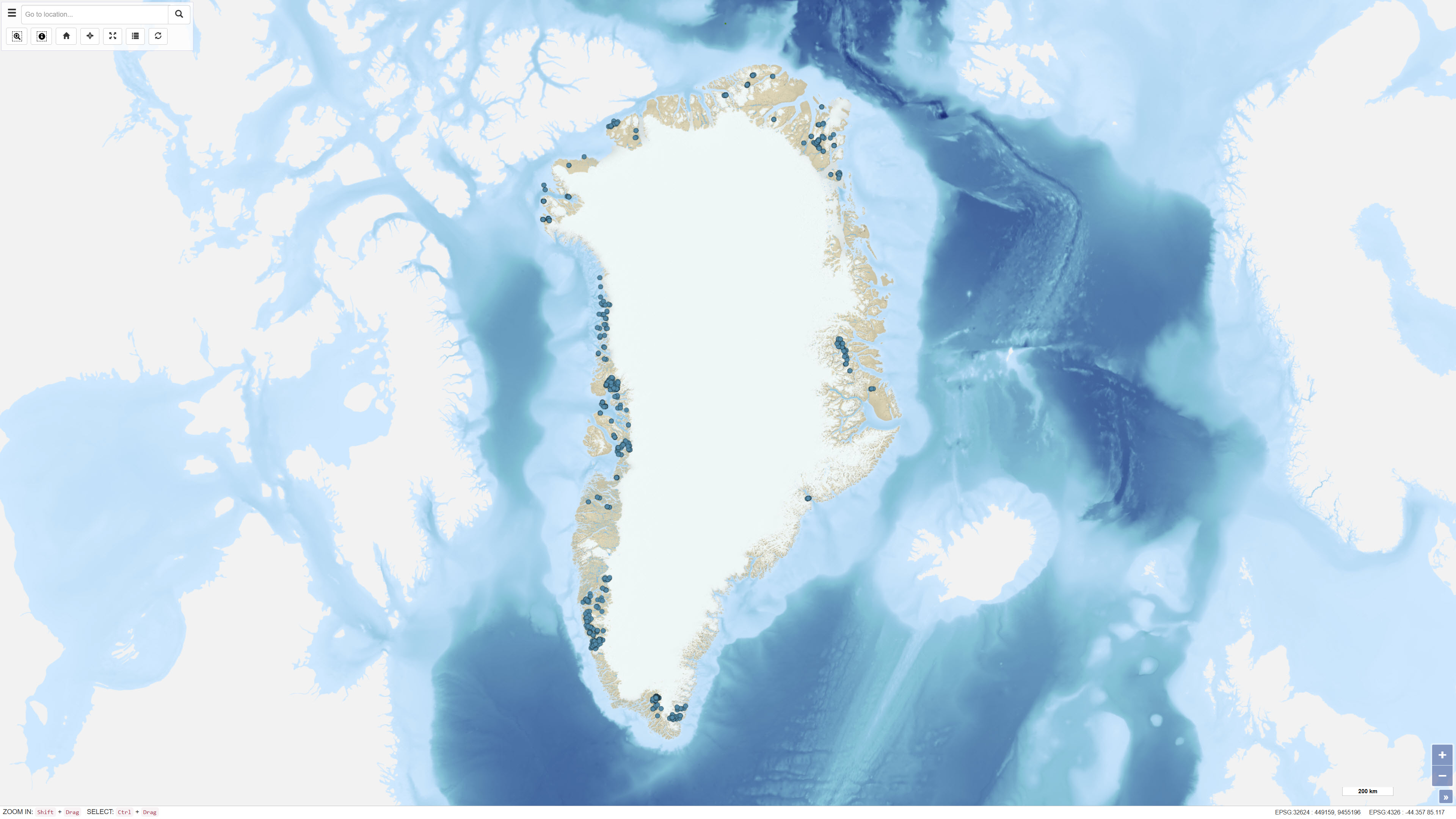
This dataset comprises regional geochemical stream sediment data from West and South Greenland and forms the basis of the Geochemical Atlas of West and South Greenland (Steenfelt, 2001). The Geochemical Atlas of West and South Greenland presents the results of a regional stream sediment geochemical mapping programme conducted between 1979 and 1998. A total of 7,122 stream sediment samples were collected from low-order streams with near-uniform spatial coverage across West and South Greenland. The <0.1 mm grain-size fraction of 500 g samples was analysed for major and trace elements using X-ray fluorescence spectrometry (XRF), instrumental neutron activation analysis (INAA), delayed neutron counting (DNC) and loss on ignition (LOI). After systematic calibration and quality control to eliminate analytical bias between different methods and time periods, a harmonised and internally consistent dataset was established containing up to 43 elements per sample. The atlas provides a regional overview of the geochemical composition of the minerogenic fraction of stream sediments and constitutes a geochemical baseline dataset for geological mapping and mineral exploration in Greenland.
-
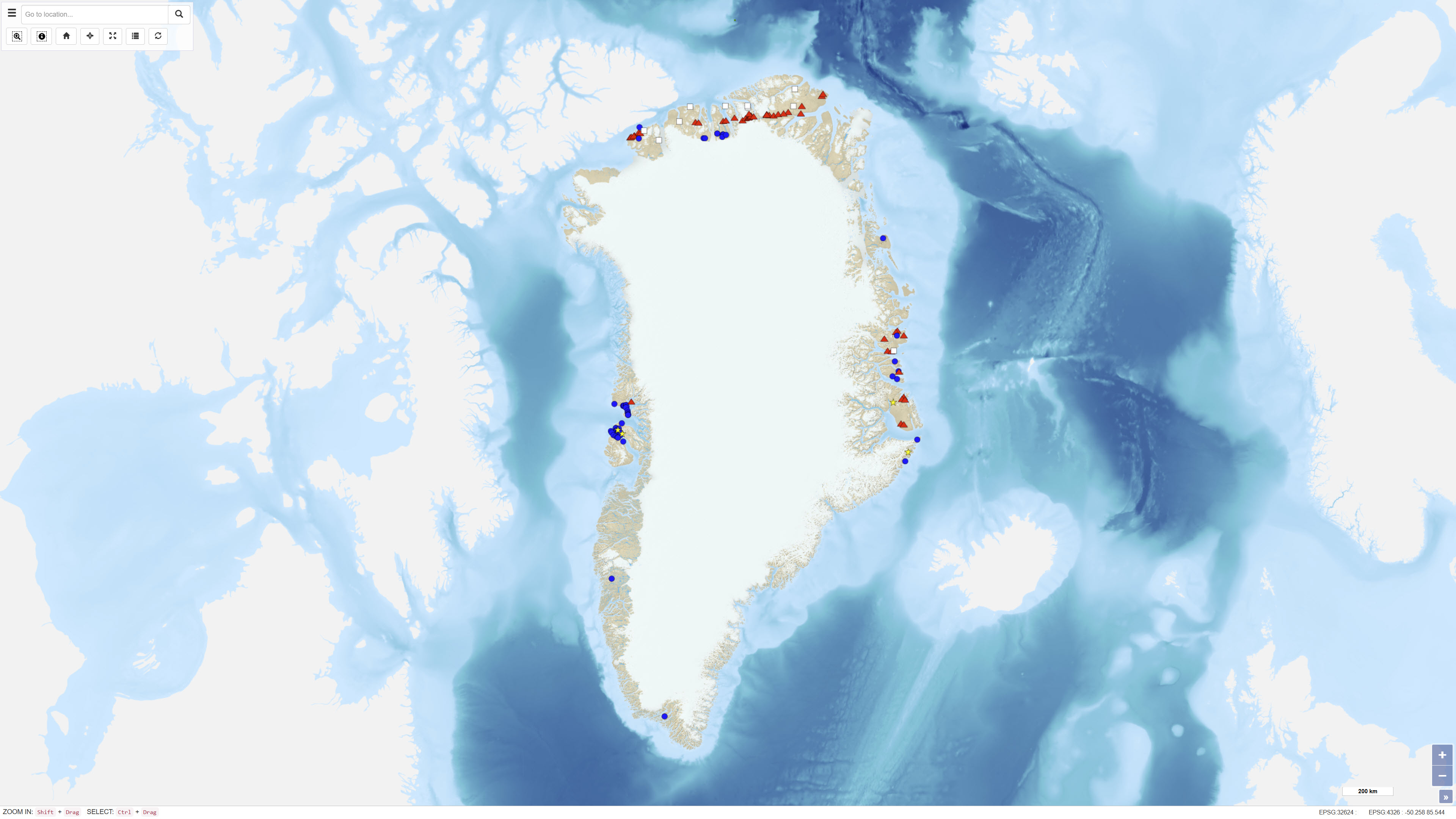
The dataset contains geochemical analytical results for 725 heavy mineral concentrate samples collected by GEUS in Greenland as part of various geological mapping and mineral exploration activities. The samples originate from several campaigns, including a regional campaign conducted between 1982 and 1986 in the Nuuk area, a 1991 campaign in the southern Nuuk region, and samples collected in 2003 in the Qaanaaq region. Additional samples derive from smaller projects and campaigns with limited documentation. Analyses were carried out at different laboratories, including Activation Laboratories and Bondar-Clegg in Canada and Risø National Laboratory in Denmark. The dataset contains raw analytical results, and metadata concerning sampling procedures and analytical quality are not complete for all samples.
-
The dataset comprises a systematic inventory of onshore petroleum seeps and stains in Greenland. The inventory includes information on approximately 130 localities distributed across Palaeozoic, Mesozoic and Cenozoic sedimentary basins in Greenland. For each locality, coordinates, site descriptions, classification of seep type, geological context, sample numbers and references to reports and publications are recorded. The classification includes oil seeps, gas seeps, mud diapirs and gas-rich springs, oil stains in volcanics, carbonates and sandstones, solid macroscopic bitumen, and fluid inclusions and other evidence of micro-seepage. The dataset synthesises existing knowledge of petroleum systems in Greenland and provides a comprehensive overview of documented natural hydrocarbon occurrences onshore.
-
%20-%20datas%C3%A6t.jpg)
The dataset contains geochemical analytical results for rock samples from Greenland, collected through GEUS field and project activities and made available as an extract from GEUS’ information system GimmeX. Samples were collected for various purposes including geological mapping, geochemistry, ore geology and mineral exploration, and no systematic rock sampling was undertaken. Analytical data are organised by analytical type/method and accompanying tables document the analytical results. Sample location accuracy varies, in particular for samples collected before 1997, and older positions may have been adjusted between different map bases.
-
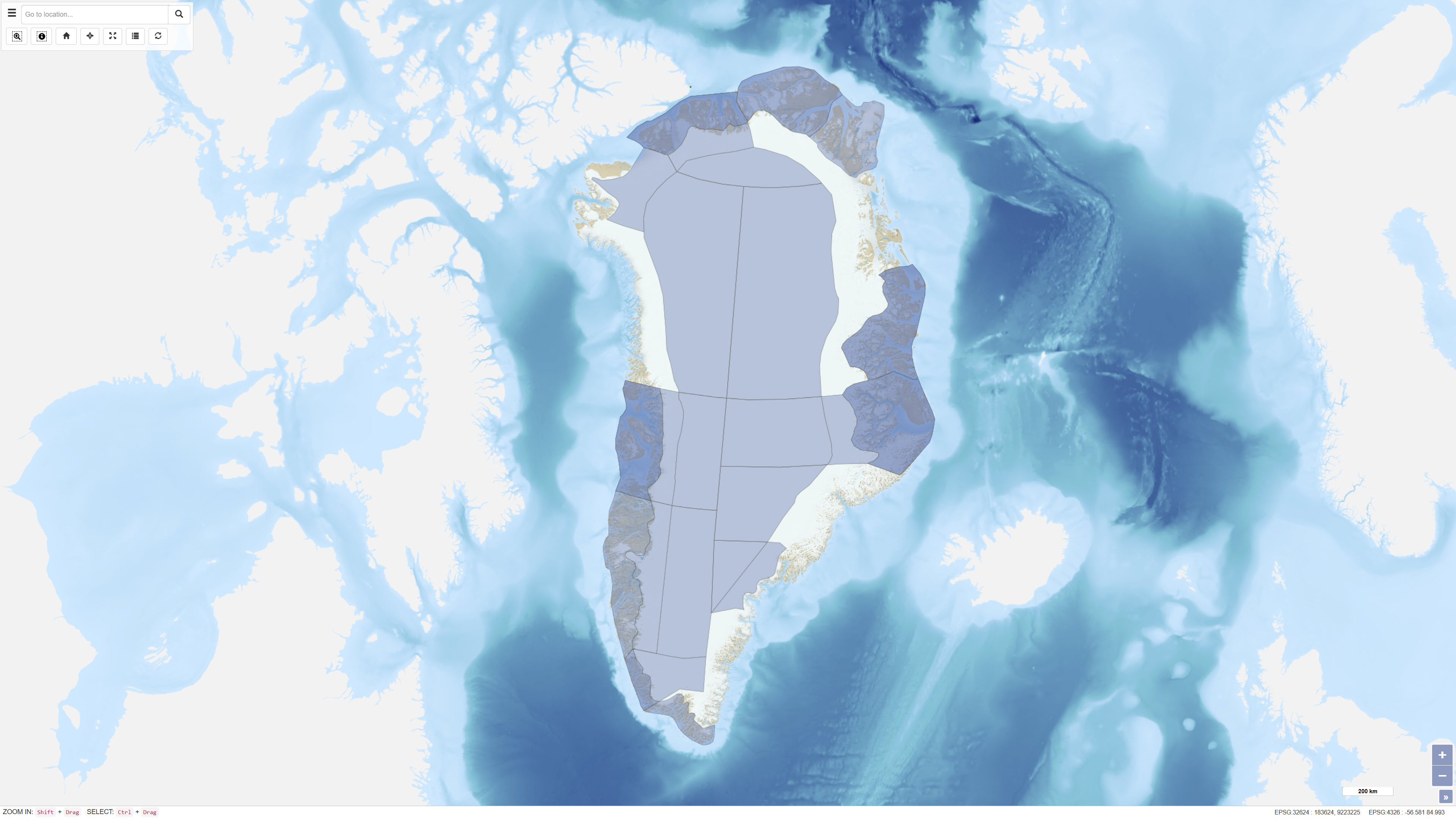
The dataset contains geographic polygons representing the areas of Greenland covered in GEUS publications and in the DODEX report database. Each publication is associated with metadata including title, authors, year of publication and reference information as well as a link to the digital publication where publicly available. The dataset includes publication series such as GEUS Bulletin, Geological Survey of Denmark and Greenland Bulletin, Bulletin Grønlands Geologiske Undersøgelse, report series and geological map descriptions. The polygons are based on the geographic extent described in each publication and serve as a spatial index for search and visualisation purposes.