 Arctic SDI catalogue
Stratigraphy and correlation
Type of resources
Available actions
Topics
Keywords
Contact for the resource
Provided by
Formats
Representation types
Update frequencies
status
Scale
-
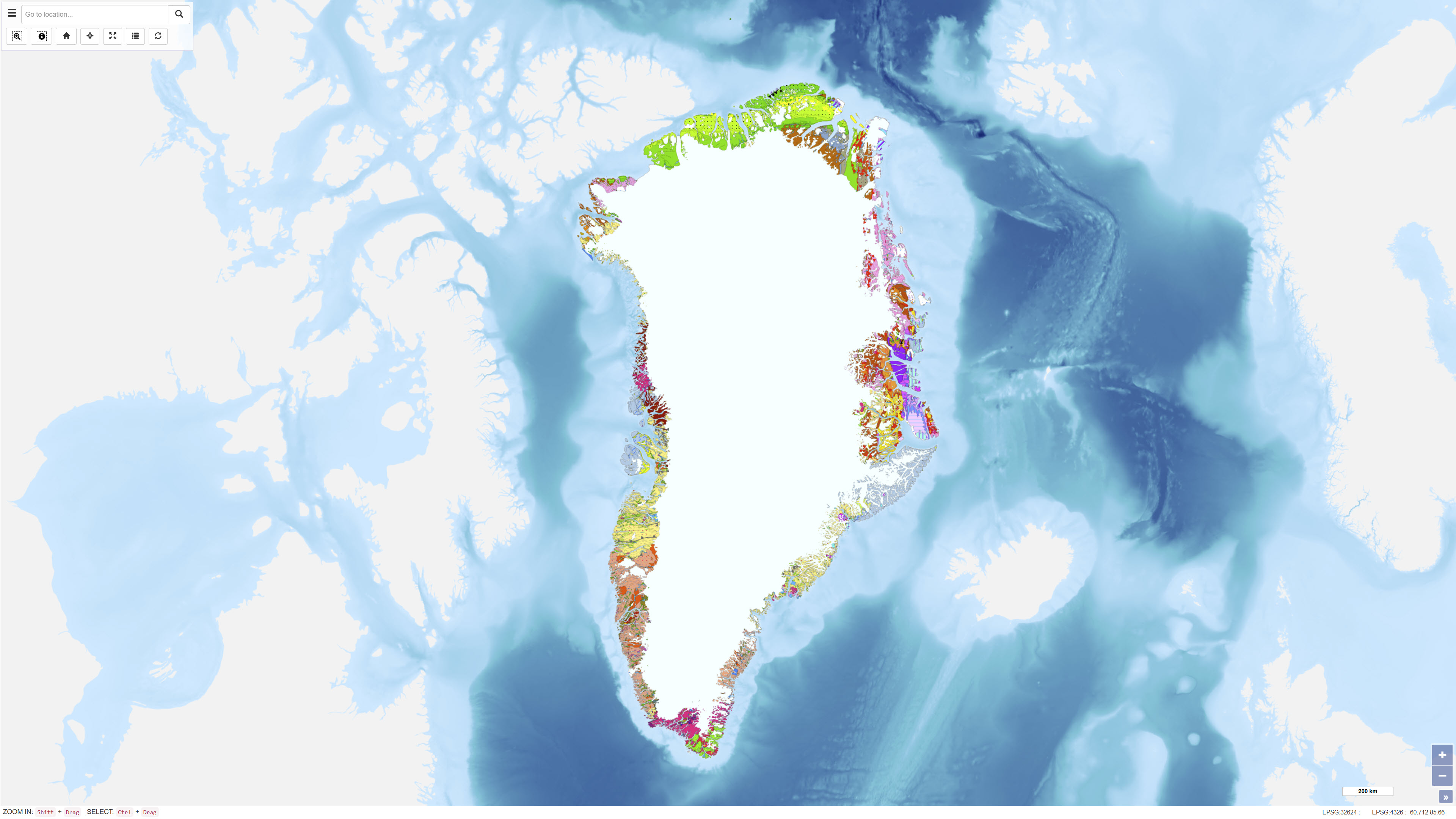
The Geological Map of Greenland at scale 1:2.500.000 provides a comprehensive regional synthesis of the geological evolution of Greenland from the earliest Archaean to the Quaternary. The map presents an integrated overview of Greenland’s geological framework, including Precambrian crystalline basement provinces, major orogenic belts, Phanerozoic sedimentary basins and widespread volcanic provinces. Greenland is characterised by large exposures of continental crust dominated by Archaean and early Proterozoic shield rocks that stabilised as part of the Laurentian shield. Younger geological elements are mainly developed along the margins of the shield, where sedimentation, deformation and magmatic activity reflect successive tectonic regimes through time. The map illustrates the distribution and relationships of these geological units and highlights the structural and stratigraphic architecture of Greenland and adjacent offshore areas. The map integrates onshore and offshore geological information and serves as a regional reference for geological interpretation, research, education and resource-related studies in Greenland.
-
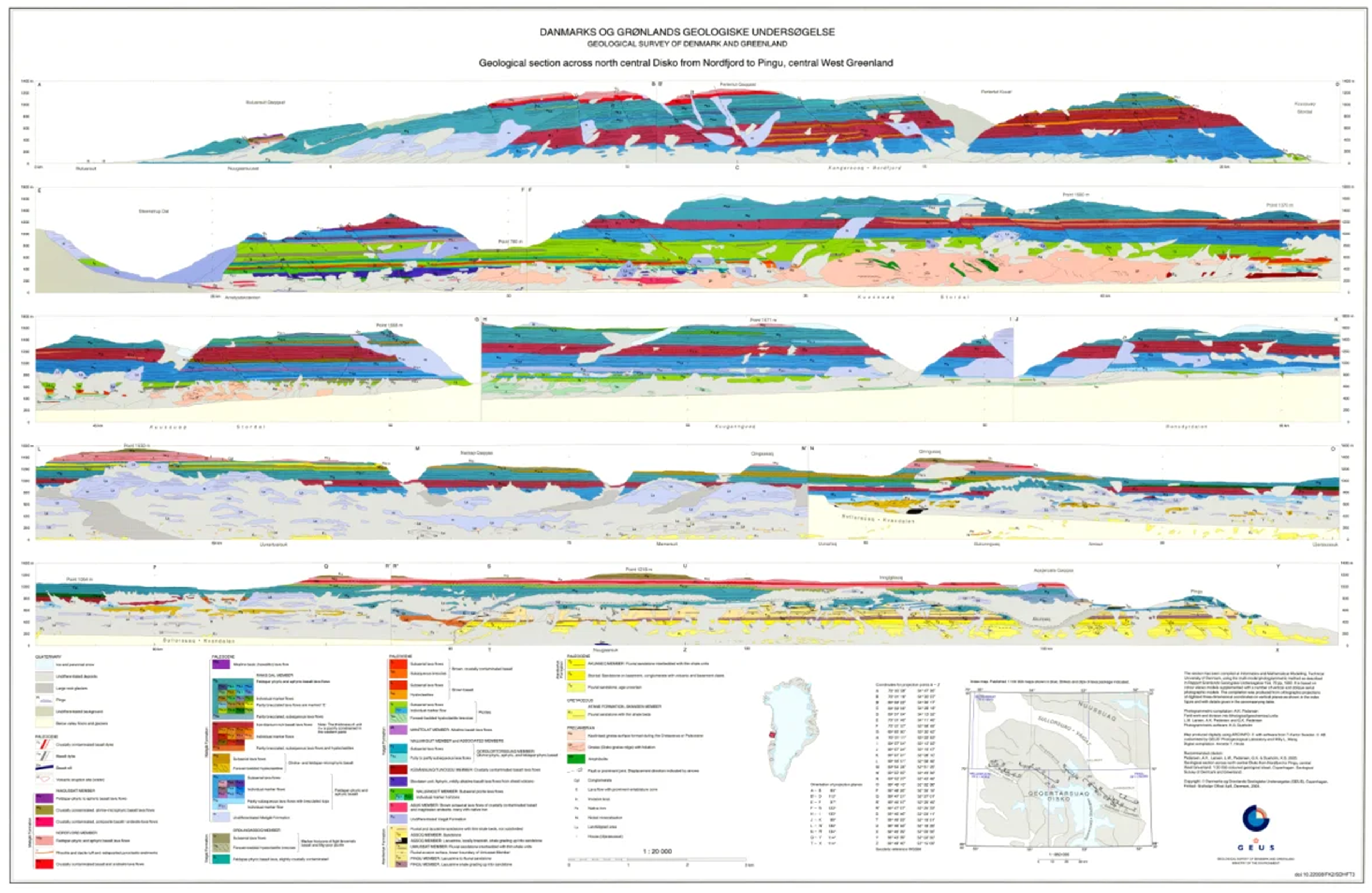
The dataset comprises a collection of geological cross sections from Greenland derived from multiple geological mapping projects and publications. The cross sections represent interpretations of subsurface geological structures and stratigraphy across selected regions and are associated with published geological maps and reports. Profile lines have been georeferenced, and the corresponding cross-section images have been digitised and stored as separate PDF files. Each profile is linked to the geological map or publication from which it originates. Due to the diverse origins of the profiles, the level of detail, scale and geological interpretation vary between individual cross sections.
-
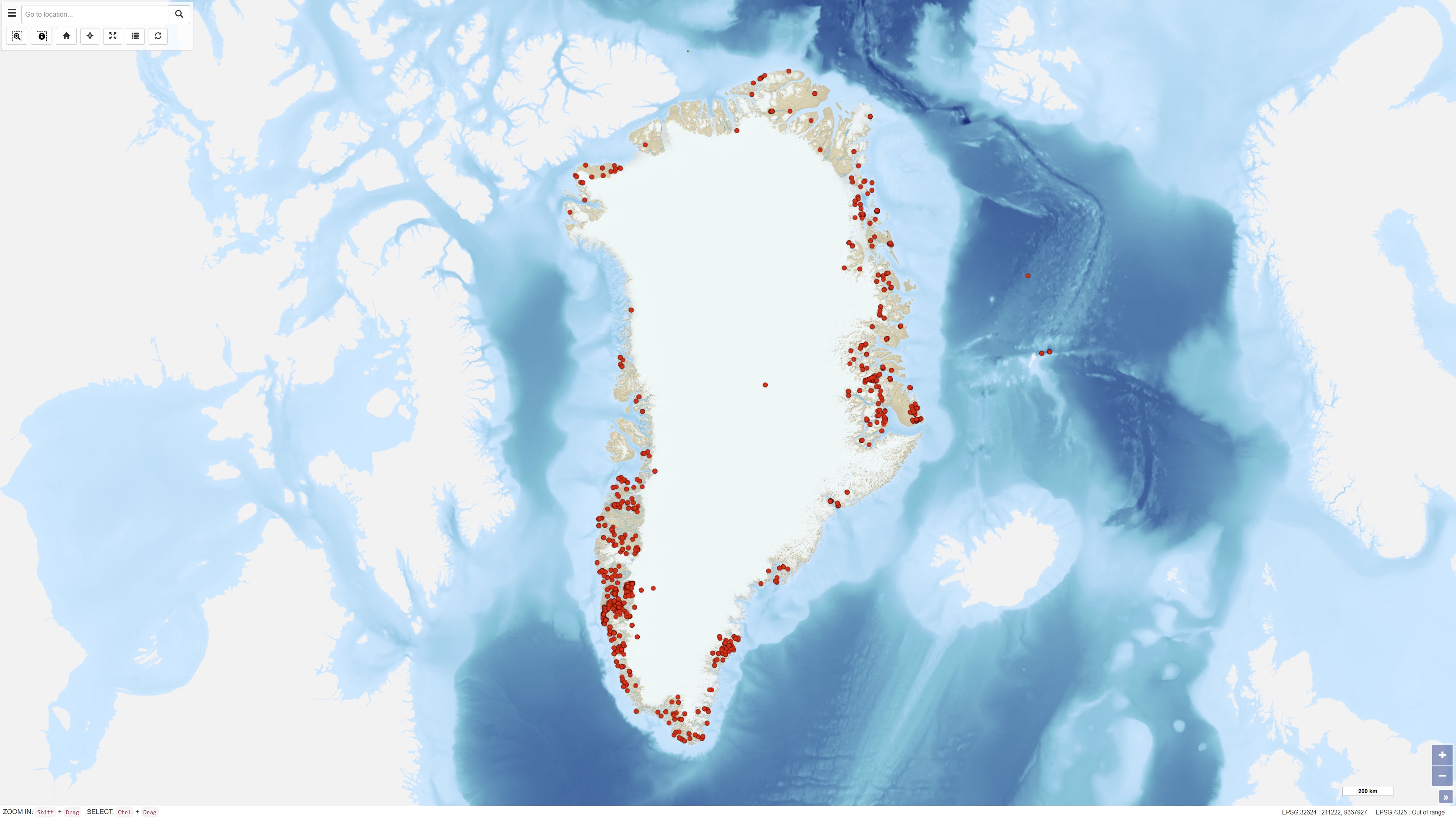
The Greenland Geochronology Database is a systematic compilation of published U-Pb geochronological data from Greenland. The dataset integrates age determinations from a wide range of scientific publications and normalises isotopic ratios and uncertainties into a consistent format, with all analytical errors reported at the 1 sigma level. Ratios have been verified against reported ages and corrected where necessary to ensure internal consistency. The database is structured to enable efficient querying and cross-comparison of geochronological information derived using different analytical standards.
-
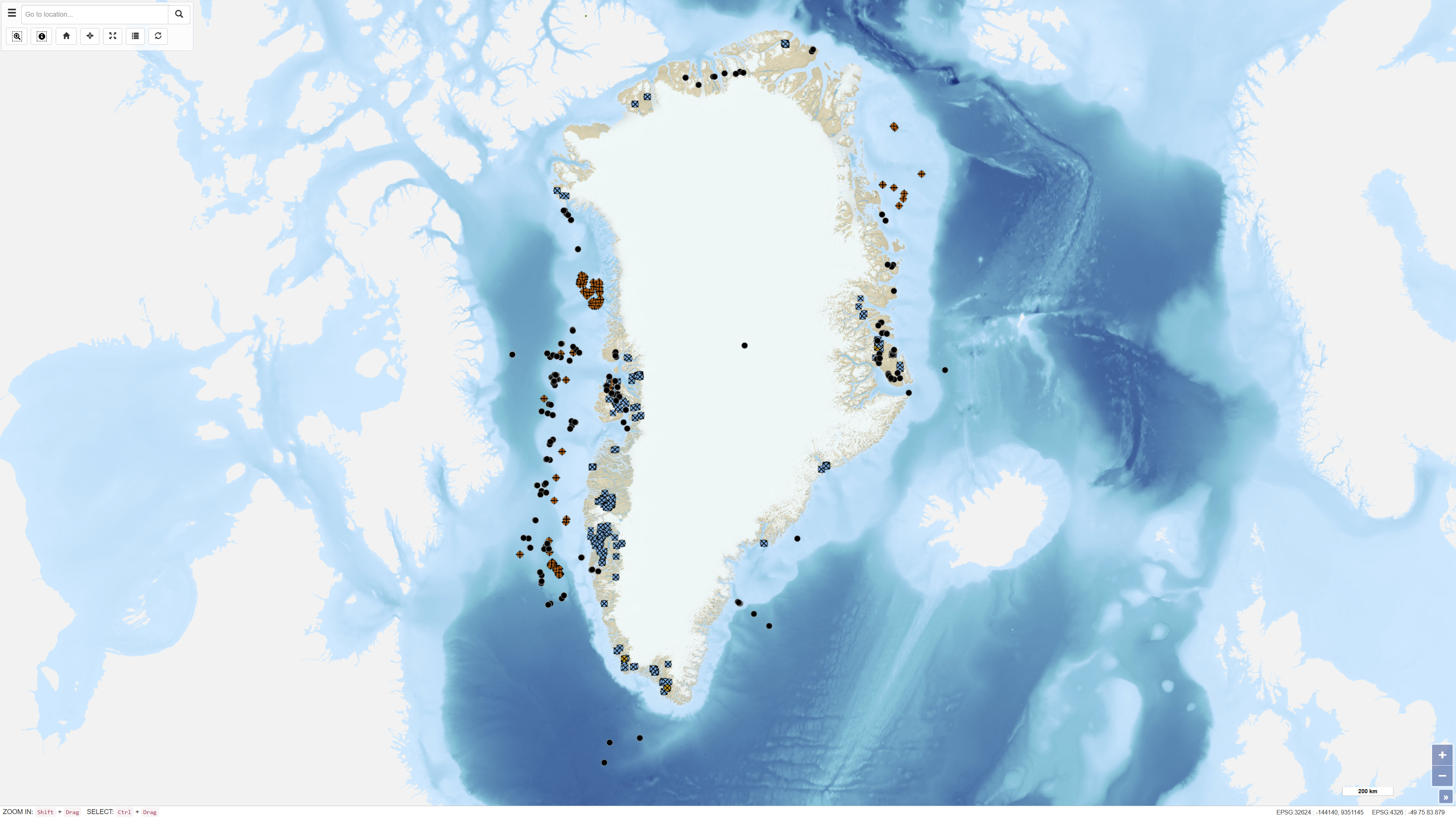
The dataset contains basic information on the location of onshore and offshore drillholes in Greenland established for scientific research as well as mineral, oil and gas exploration. The dataset functions as a geographic reference layer and, where available, includes links to reports or summary sheets representing the original source of information. The dataset covers drillholes established between 1948 and 2019 and is subject to continuous updates as new information becomes available through scientific publications, press releases and company documentation.
-
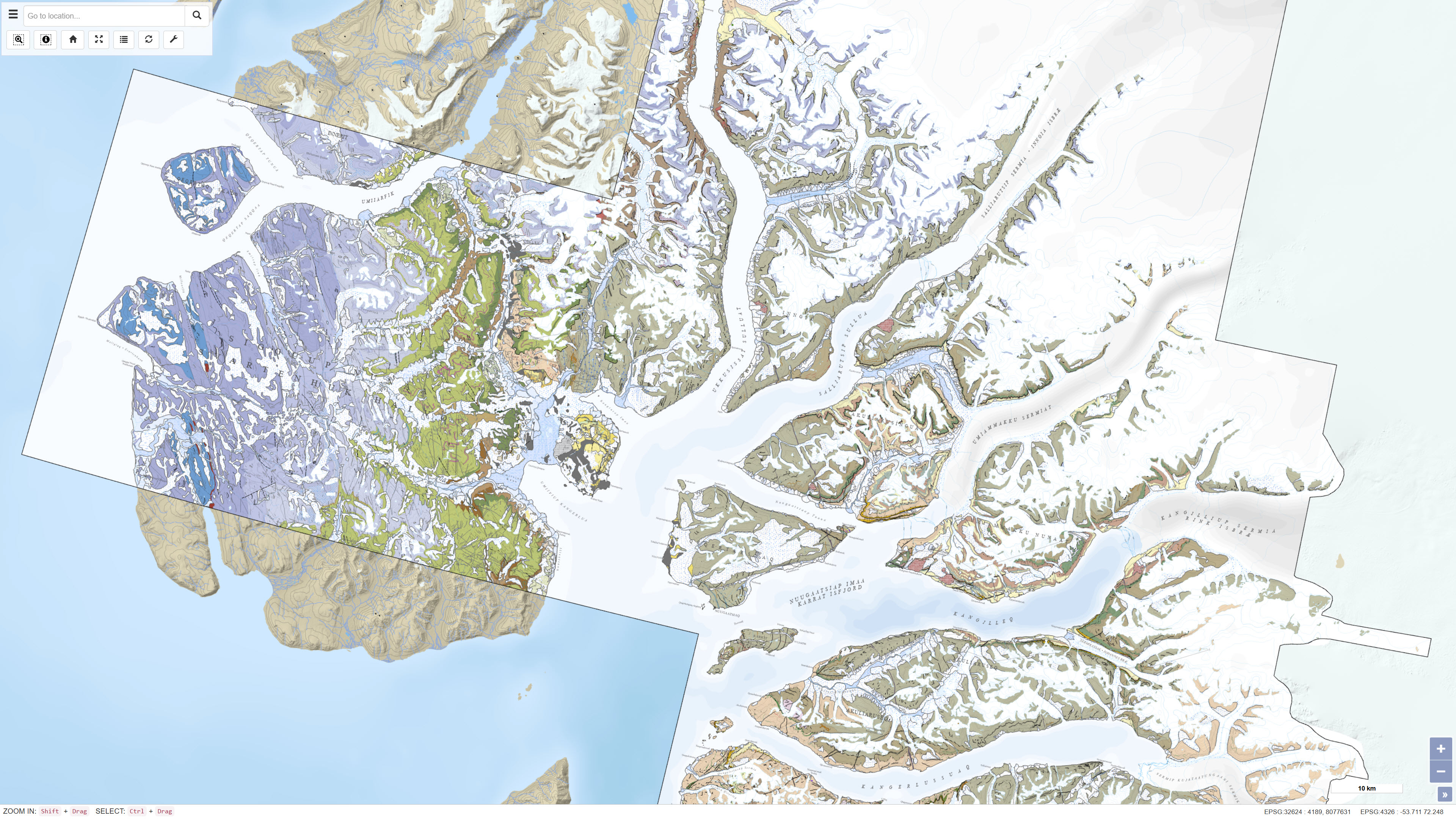
This dataset contains a seamless digital geological map of the Karrat area in central West Greenland based on four geological map sheets at a scale of 1:100 000: Maarmorilik 71 V.2 South, Nuugaatsiaq 71 V.2 North, Pannertooq 72 V.2 South and Svartenhuk 71 V.1 North. Geological mapping was carried out in the fjord regions north of Uummannaq as part of a collaborative project between the Geological Survey of Denmark and Greenland (GEUS) and the Ministry of Mineral Resources and Justice of Greenland. The dataset is based on 3D photogeology using more than 35,000 oblique photographs collected during three field seasons combined with traditional field observations and subsequent geochemical and geochronological analyses. The dataset provides an updated geological understanding of the meta-sedimentary and meta-volcanic rocks of the Karrat Group, the structural evolution of the Rinkian Orogen and the structure of the West Greenland Basalt Group. The dataset supports geological research, regional geological mapping and mineral exploration.
-
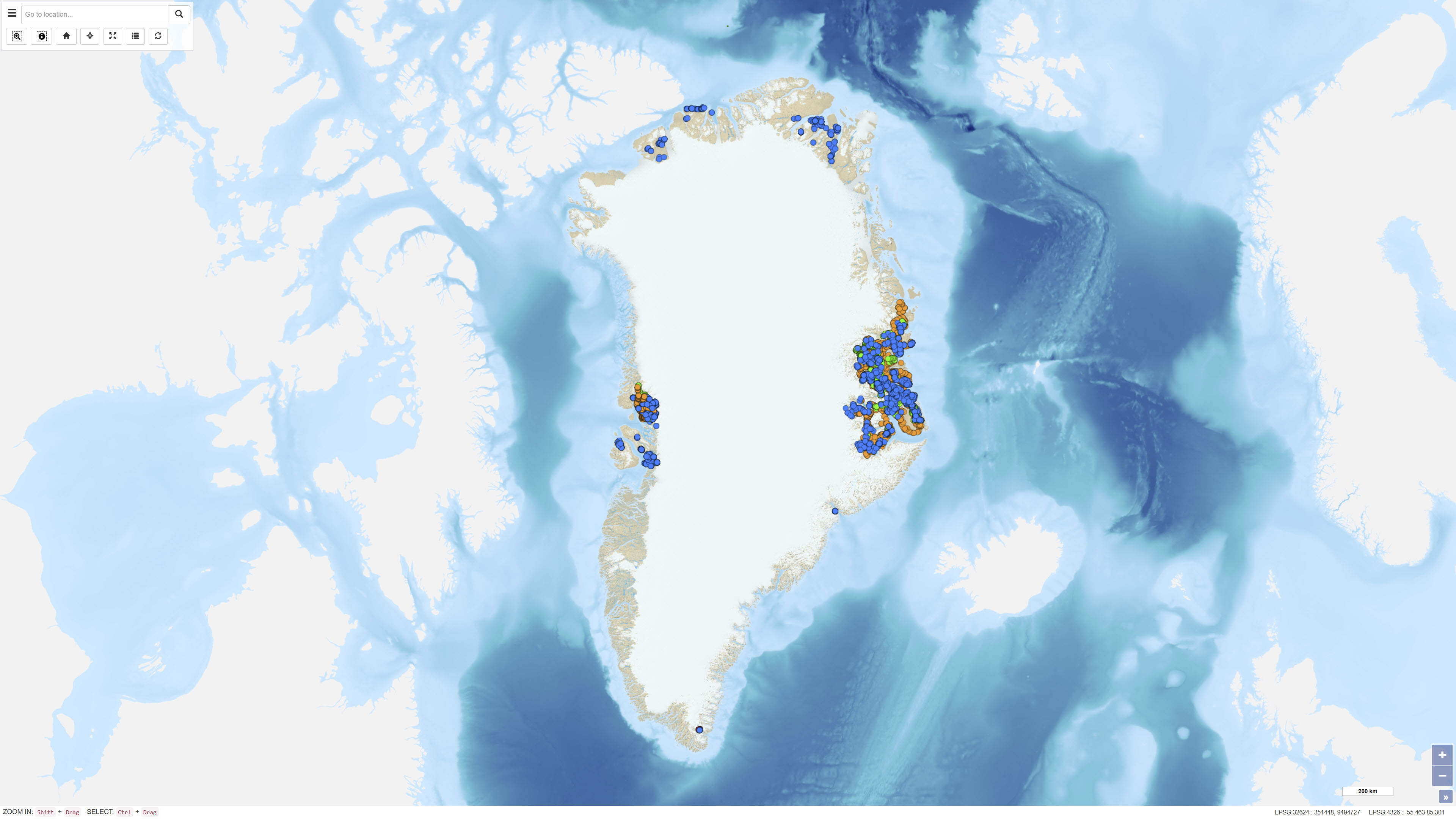
The dataset contains geochemical sample data from four company reports submitted to the Ministry of Mineral Resources (MMR) and previously to the Geological Survey of Denmark and Greenland (GEUS). The reports were originally delivered in paper format and later scanned. The geochemical data have been digitally restored through optical character recognition of scanned documents and georeferencing of sample locations. The dataset has been uploaded to the GEUS sample database with necessary adjustments to sample names and metadata. The dataset includes samples with coordinates but without geochemical analyses, as well as samples with analyses lacking unambiguous coordinates.
-
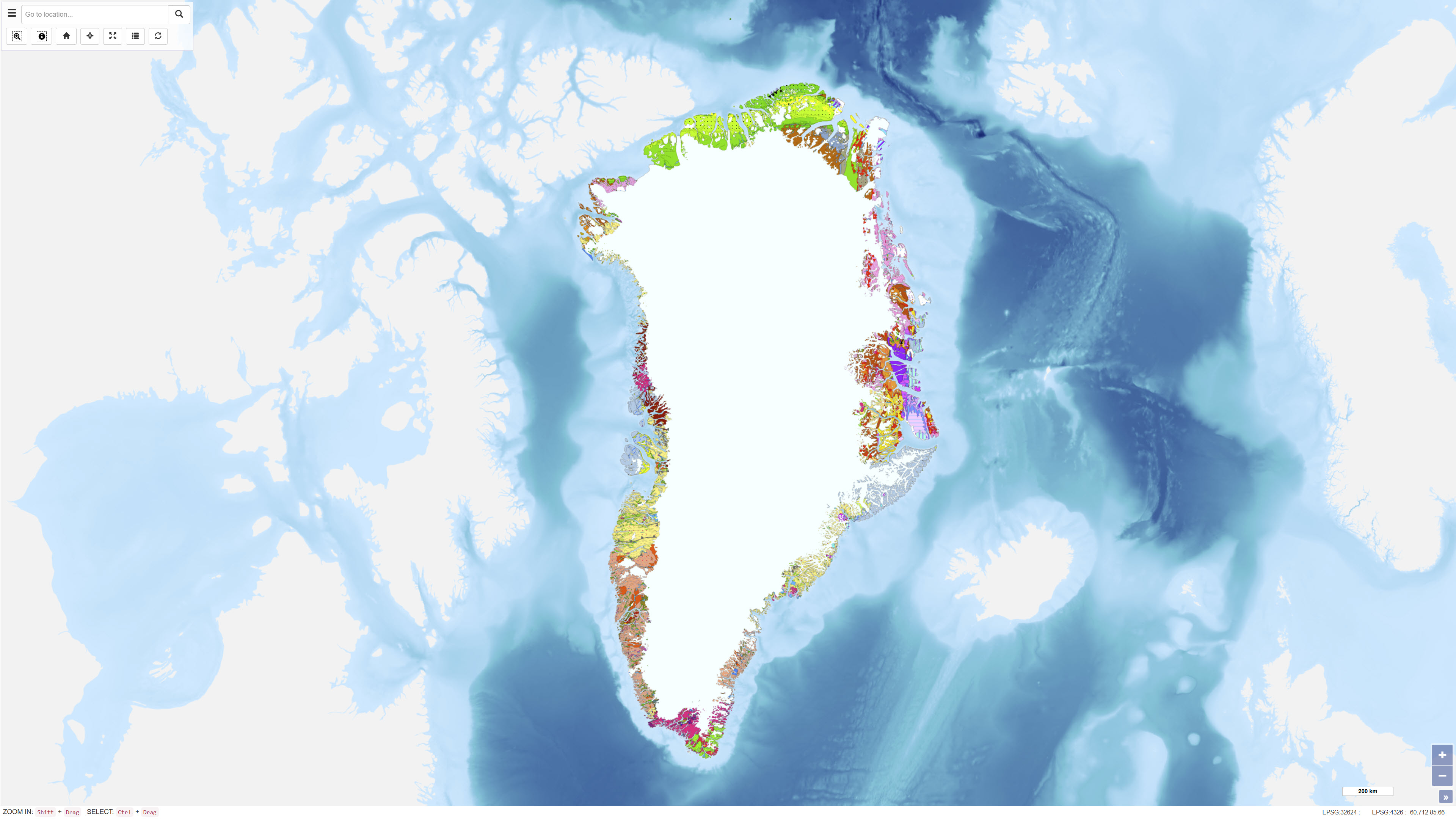
The main geological environments in Greenland and their mineral resources have been described and divided into four main geological environments: infracrustal regions, supracrustal regions, magmatic provinces and sedimentary basin regions. Within the various geological environments, characteristic mineral deposits are outlined. Within the infracrustal environment, relatively few mineral occurrences are recorded in Greenland, but three types are described: gold in gneiss, nickel and copper in mafic intrusions, and olivine in ultramafic rocks. For more detailed information, reference is made to the report Greenland geological environments and mineral resources.
-
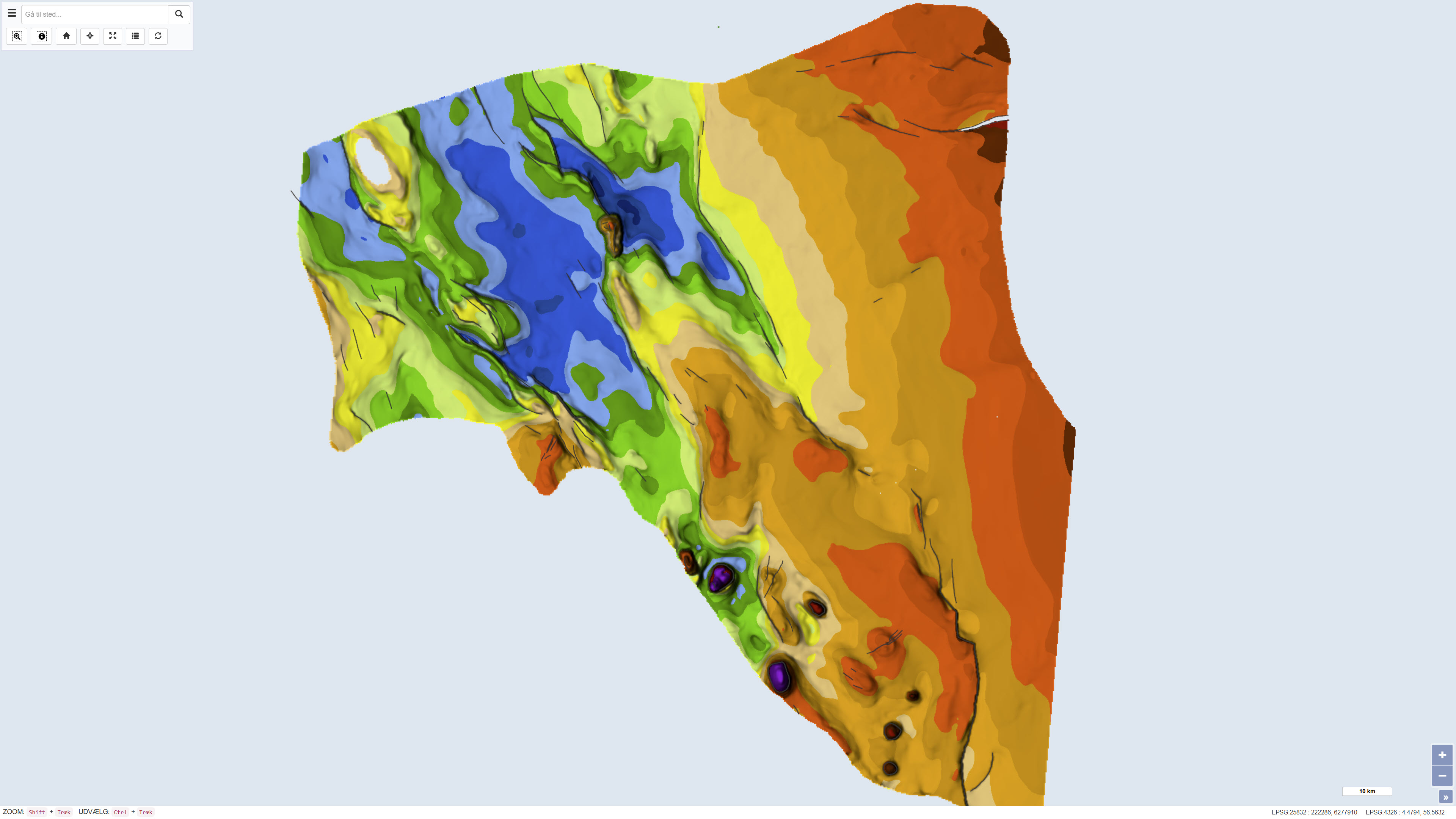
The dataset comprises a geological map of the Danish Central Graben at a scale of 1:200,000 presenting regional maps of ‘Base Cretaceous’ and the Cromer Knoll Group. The map was published in 1995 as part of the DGU Map Series no. 49 and was produced as part of a comprehensive geological mapping of the Danish Central Graben. The mapping is based on regional interpretation of seismic data supplemented by information from boreholes. The map covers the Danish part of the Central Graben and parts of the eastern North Sea, and adjacent areas in the Norwegian, British and German sectors are included in order to define regional structural relationships. The map sheet consists of several thematic sub-maps that together describe the structure and stratigraphy of the area.
-
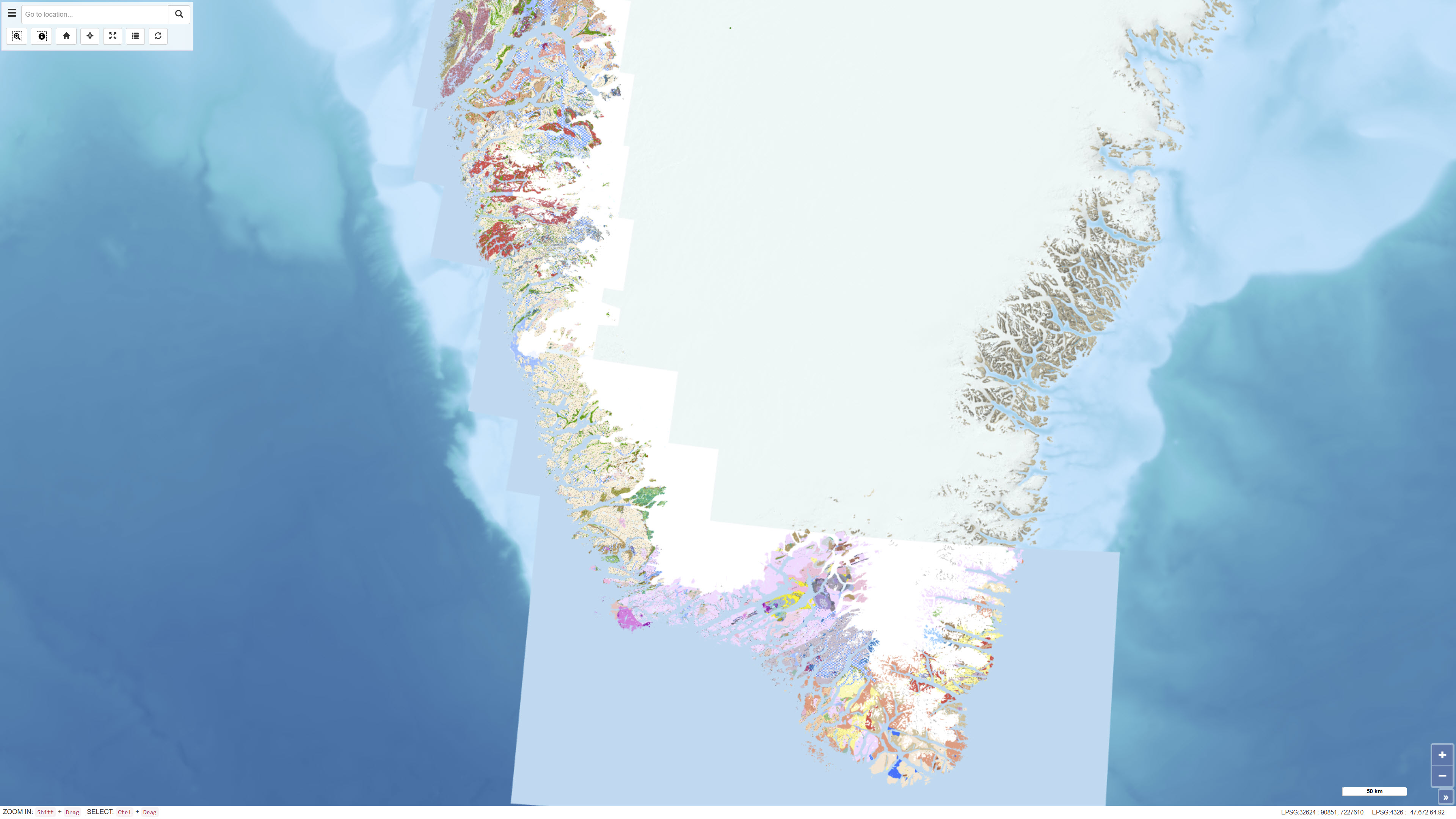
The seamless digital geological map is based on the digitisation and harmonisation of 21 geological map sheets at 1:100 000 scale, originally published by GGU/GEUS between 1966 and 2011. This edition updates and expands the 2019 version, which included 16 sheets, by integrating five additional 1:100 000 sheets and selected information from 1:500 000 scale maps in areas lacking detailed coverage. The map also incorporates a simplified geological interpretation of Bjørneøen and Storeø in Godthåbsfjorden based on detailed mapping by Claus Østergaard (2005). The dataset provides a consistent, seamless geological framework optimised for digital display at the 1:100 000 scale.
-
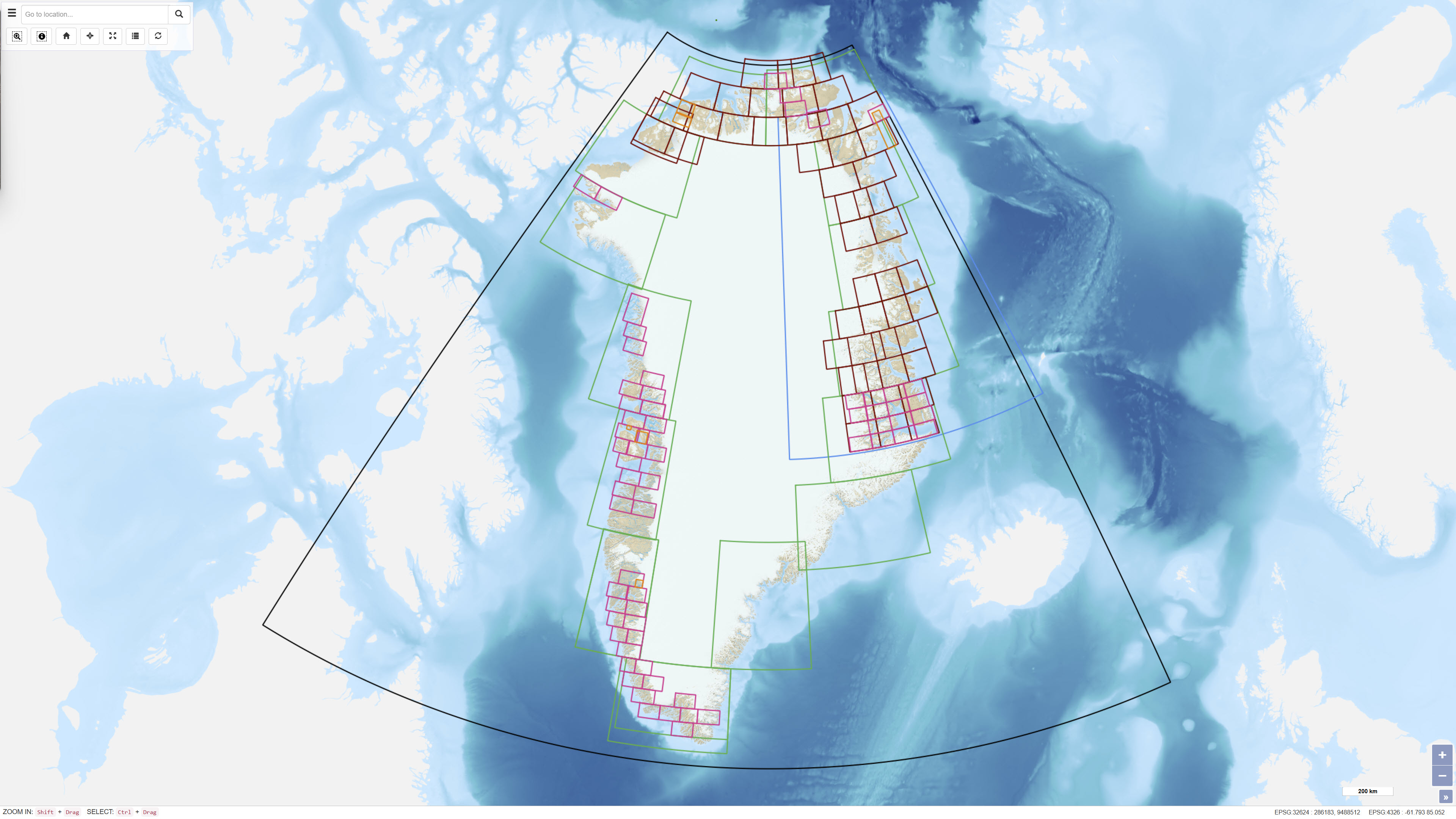
The dataset represents an index layer showing the geographic extent of geological maps of Greenland printed and published by the Geological Survey of Greenland (GGU) and the Geological Survey of Denmark and Greenland (GEUS) since 1957. The layer functions as a search and reference tool and does not contain the original map material. The dataset provides direct links to the GEUS Dataverse, where each map is assigned a DOI and can be downloaded as high-resolution TIFF images (400 dpi) or PDF files.