 Arctic SDI catalogue
Hydrology
Type of resources
Categories
Available actions
Topics
Keywords
Contact for the resource
Provided by
Years
Formats
Representation types
Update frequencies
status
Service types
Scale
-

The “Annual Unit Runoff (dam3/km2) for a 75% Probability of Exceedence” dataset is a line data set that covers the extent of Canada. It shows the 75% Probability of exceedence annual unit runoff.
-
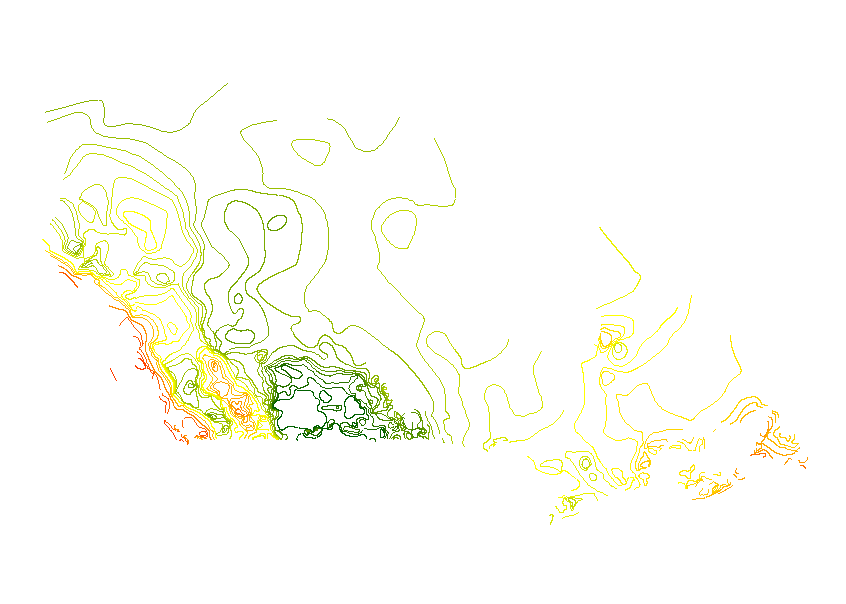
The “Annual Unit Runoff (dam3/km2) for a 50% Probability of Exceedence” dataset is a line data set that covers the extent of Canada. It shows the 50% Probability of exceedence annual unit runoff.
-

The “Annual Unit Runoff (dam3/km2) for a 25% Probability of Exceedence” dataset is a line data set that covers the extent of Canada. It shows the 25% Probability of exceedence annual unit runoff.
-

The “Annual Unit Runoff (dam3/km2) for a 90% Probability of Exceedence” dataset is a line data set that covers the extent of Canada. It shows the 90% Probability of exceedence annual unit runoff.
-

The “Annual Unit Runoff (dam3/km2) for a 10% Probability of Exceedence” dataset is a line data set that covers the extent of Canada. It shows the 10% Probability of exceedence annual unit runoff.
-

The “Annual Unit Runoff (dam3/km2) for a 80% Probability of Exceedence” dataset is a line data set that covers the extent of Canada. It shows the 80% Probability of exceedence annual unit runoff.
-

The “Annual Unit Runoff (dam3/km2) for a 70% Probability of Exceedence” dataset is a line data set that covers the extent of Canada. It shows the 70% Probability of exceedence annual unit runoff.
-

The “Stations used for Unit Runoff Analysis” dataset is a point data set for select hydrological stations that covers the extent of Canada.
-

The "Hydrometric Gauging Stations of the AAFC Watersheds Project - 2013" dataset is a geospatial data layer containing point features representing the hydrometric gauging stations of the Agriculture and Agri-Food Canada (AAFC) Watersheds Project. The gauging stations are sourced from Environment Canada, the United States and Canadian provinces. Additional virtual stations have been generated to address hydrometric structural issues, like river confluences or lake inlets. Attribute information includes station identification, location and associated catchments/basins.
-
The Agriculture and Agri-Food Canada’s (AAFC) Watersheds Project level series supplies a number of watershed and watershed related datasets for the Prairie Provinces. The levels are greater or smaller assemblages of hydrometric areas, or the components defining them. The Project is organized by hydrometric gauging stations which are sourced from Environment Canada, the United States, and Canadian provinces. Additional stations were generated to address structural issues, like river confluences or lake inlets. Collectively, they are referred to as the gauging stations, or simply, the stations. The drainage area that each station monitors, between itself and one or more of its upstream neighbours, is called an ‘incremental gross drainage area’. The incremental gross drainage areas are collected into larger or smaller groupings based on size or defined interest to generate the various ‘levels ’of the series. They include: Basins of varying size: 1. Major drainage systems (3): Arctic Ocean, Hudson Bay and Gulf of Mexico; 2. Major basins (23): associated with river or lake reaches; 3. Project sub-basins (47): created specifically for the project; 4. Sub-basins (51): based on specific Environment Canada hydrometric gauging station locations; 5. Sub-sub-basins (311): based on specific Environment Canada hydrometric gauging station locations); Incremental drainage areas: 6. Incremental gross drainage areas: one per gauging station. The incremental gross drainage areas are further subdivided into portions that either contribute or do not contribute to drainage to an average runoff event. The portions that do contribute are called ‘effective drainage’ areas, while those that don’t are called ‘non-contributing’. These generate the following levels: 7. Incremental effective drainage areas; and 8. Incremental non-contributing areas. Total drainage areas: 9. Total gross drainage areas; 10. Total effective drainage areas; and 11. Total non-contributing areas; And when combined for the entire project, yields the: 12. Effective drainage area. The series also includes the components: 13. The gauging stations; 14. The collection of boundaries (lines) of the gross incremental drainage areas as well as the boundaries that separate contributing from non-contributing areas for an average runoff event; and 15. A network of downstream-directed lines that connect the gauging stations. All linework is derived from large scale topographic data. One additional non-spatial dataset, a table of tallied values by gauging station, is provided: 16. The Project Gauging Station Table. The Project area, designed for the Prairie Provinces, covers all of Alberta, Saskatchewan and Manitoba, and those portions of British Columbia, Northwest Territories, Nunavut, Ontario, and the United States that are required to complete the trans-border sections of the watersheds. Since 1975 the AAFC Watersheds Project has systematically collected and refined watershed boundaries for the Prairies. The result is the authoritative source for gross and effective drainage areas in the Prairie Provinces. The initial 1:50,000 analog delineations were moved to their digital form in 1994. Since then, the delineations have increased in accuracy and extent, and the series levels have increased to 16 in number.